

Essential Hydraulic Elevator Parts and How They Work Together
Hydraulic elevators use several key parts to move smoothly. The hydraulic pump pushes fluid into a cylinder, which raises the piston and lifts the elevator cab. The motor powers the pump, while valves control the flow of fluid for smooth movement. The control system manages direction and speed. Guide rails keep the cab stable, and buffers help stop it safely. Together, these parts work as a team to ensure safe and reliable elevator travel. Uses of hydraulic elevator in low- to mid-rise buildings for transporting passengers and goods efficiently and safely.
For years, hydraulic elevators have proven to be an efficient method of vertical transportation for low- to mid-rise buildings because they are reliable, perform well, and have a basic mechanical design. However, behind the quiet ride and cushioned landings is a tightly knitted collection of parts working in smooth concert to accomplish a common goal: transporting efficiently and safely. To understand fully how hydraulic elevators operate, we must explore the primary components, their roles, and why coordination matters so much.
This blog identifies the most essential hydraulic elevator components and details the position and function of each of the units. From the powerhouse below to the safety features above, every part plays a role in making your ride seamless and safe.
1. How Hydraulic Elevators Work: A Quick Overview
Hydraulic elevators operate using pressurised fluid to lift and lower the car. Unlike the traditional traction systems that use ropes and pulleys, the hydraulic system uses a hydraulic pump to push oil into the cylinder. The pump pushes the oil into the cylinder, which then moves the piston, which raises the elevator car. When it is time to come down, the hydraulics simply release the pressure and allow the elevator to descend downwards using gravity.
These elevators are often installed by elevator companies in Mumbai in buildings that are (generally) up to five or six floors. They are easy to install and do not have the same starting costs, and thus, they are popular in both commercial and residential buildings. Hydraulic elevators operate using pressurised fluid to lift and lower the car, and are especially suitable as a hydraulic lift for goods, offering reliable performance and smooth operation for transporting heavy materials in low- to mid-rise buildings.

2. Core Components of a Hydraulic Elevator
Let’s take a closer look at the mechanical pieces that come together to make hydraulic elevators work like clockwork.
2.1 Hydraulic Power Unit
At the heart of the system is the hydraulic power unit. This part includes a pump, an electric motor, and an oil reservoir.
The motor powers the pump, which sends hydraulic oil from the reservoir into the cylinder. That pressure forces the piston to move, which in turn lifts the elevator car. The power unit also regulates the flow of oil when descending, allowing for a smooth and controlled ride.
Aside from powering movement, this unit helps manage speed and direction. Its performance directly affects how quickly the elevator responds to calls and how comfortably it travels between floors.
2.2 Hydraulic Cylinder and Piston
Once the oil is pressurised, it flows into the hydraulic cylinder. Inside this cylinder is the piston, which rises as the oil pressure increases. This movement pushes the elevator car up.
The quality of the cylinder and piston is critical. Any weakness here can lead to inefficiencies or even safety hazards. That’s why cylinders are built to handle high pressure and resist wear over time.
These parts essentially convert fluid power into mechanical motion. Without them, the elevator wouldn’t move an inch.
2.3 Control Valve
This component is responsible for controlling how much oil enters or exits the cylinder. It ensures smooth starts, precise stops, and consistent speed regulation throughout the ride.
There are different types of control valves, including manual, electronic, and proportional. Proportional valves are more advanced and can fine-tune the elevator’s movement based on real-time inputs. Elevator companies in Mumbai often recommend electronic or proportional options for improved energy efficiency.
When a ride feels jittery or unpredictable, it’s usually a problem with this valve.
2.4 Elevator Car (Cab)
The elevator car or cab is the part passengers see and ride in. It’s designed for comfort and safety, but its structure also has to be strong enough to support weight while remaining aligned with the guide rails.
The bottom of the cab connects directly to the piston rod. When the piston moves up, the car follows. Some systems use a sheave setup if space doesn’t allow for direct piston contact, but the underlying function remains similar.
The car design also ties into the types of elevator doors used, such as centre opening, single slide, or telescopic. Each design has its own space and door mechanism needs, particularly when paired with features like a lift door sensor.
2.5 Guide Rails
Guide rails are fixed inside the elevator shaft on both sides. Their role is to keep the cab travelling straight without wobble or sway.
They act like tracks for the elevator car, guiding it up and down during operation. Without guide rails, the ride would be unstable and potentially dangerous.
These rails also provide anchor points for safety systems and ensure the car aligns properly with each floor.
2.6 Hoistway (Shaft)
This is the vertical space through which the elevator moves. It contains the cab, guide rails, cylinder, and safety equipment.
The hoistway needs to be strong and well-constructed to support not just the elevator system but also meet fire, structural, and seismic codes. It also must have enough space to accommodate different types of elevator doors and associated equipment.
Proper ventilation and lighting are also important inside the shaft for maintenance and inspection.
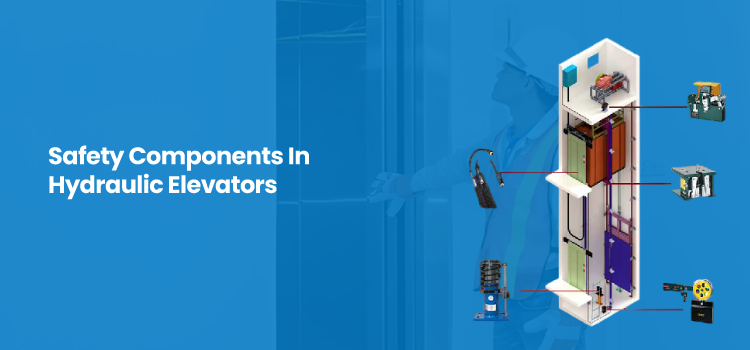
3. Safety Components in Hydraulic Elevators
Safety features are built into every part of the system. Here’s a look at what protects passengers and equipment.
3.1 Buffer System
Buffers sit at the bottom of the hoistway. These hydraulic or spring devices absorb shock if the elevator goes past its lowest landing.
They’re a backup measure but an essential one. If there’s ever a miscommunication between the controller and power unit, buffers are there to prevent a crash landing.
3.2 Manual Lowering Valve
During a power outage, elevators can’t operate automatically. That’s where this valve comes in.
A trained technician can manually release hydraulic pressure using this valve, slowly lowering the car to the nearest floor. It’s a simple part but vital in emergencies.
3.3 Pressure Relief Valve
If the system ever builds up too much hydraulic pressure, this valve opens to release it.
This protects the power unit and cylinder from stress or rupture. It acts as a pressure guardian, kicking in only when needed.
3.4 Overspeed Governor
While not always found in basic hydraulic setups, some modern elevators include an overspeed governor.
It keeps an eye on how fast the car is moving and steps in if it detects a sudden drop or excessive speed. Elevator companies in Mumbai often install this for added peace of mind in systems that require an extra layer of protection.
4. How These Parts Work Together: The Big Picture
When you press a button, here’s what happens.
The control system tells the power unit to pump oil into the cylinder. The piston rises, lifting the elevator car along the guide rails. The control valve manages speed and start/stop movement. Inside the shaft, all these parts operate in harmony. Safety systems stand by quietly, only jumping into action when needed.
It’s a beautifully synchronised process, all hidden behind walls and doors.
5. Maintenance Tips for Hydraulic Elevator Parts
Like any machine, hydraulic elevators need regular care.
- Check oil levels monthly and replace oil when it starts to break down
- Inspect the cylinder and piston for leaks or corrosion
- Test control valves for smooth starts and stops
- Clean the hoistway to prevent dust from affecting guide rails and sensors
- Ensure the lift door sensor works consistently to avoid door closure accidents
- Verify pressure relief and lowering valves are functional during inspection visits
Routine servicing keeps performance steady and avoids expensive repairs.
Regular maintenance of hydraulic elevator parts ensures smooth operation, safety, and longer system life, especially when used as a hydraulic lift for goods handling heavy loads. Routine checks of oil levels, seals, cylinders, and pump performance help prevent breakdowns and maintain efficiency.
Conclusion
Every part in a hydraulic elevator system has a role to play. From generating lift to guiding the ride and ensuring safety, these components form a tight-knit system. Knowing how these essential hydraulic elevator parts work together gives insight into the effort behind every smooth journey between floors.
Understanding this also helps when choosing a setup or troubleshooting issues, especially for those working with elevator companies in Mumbai.


Leave a Reply