
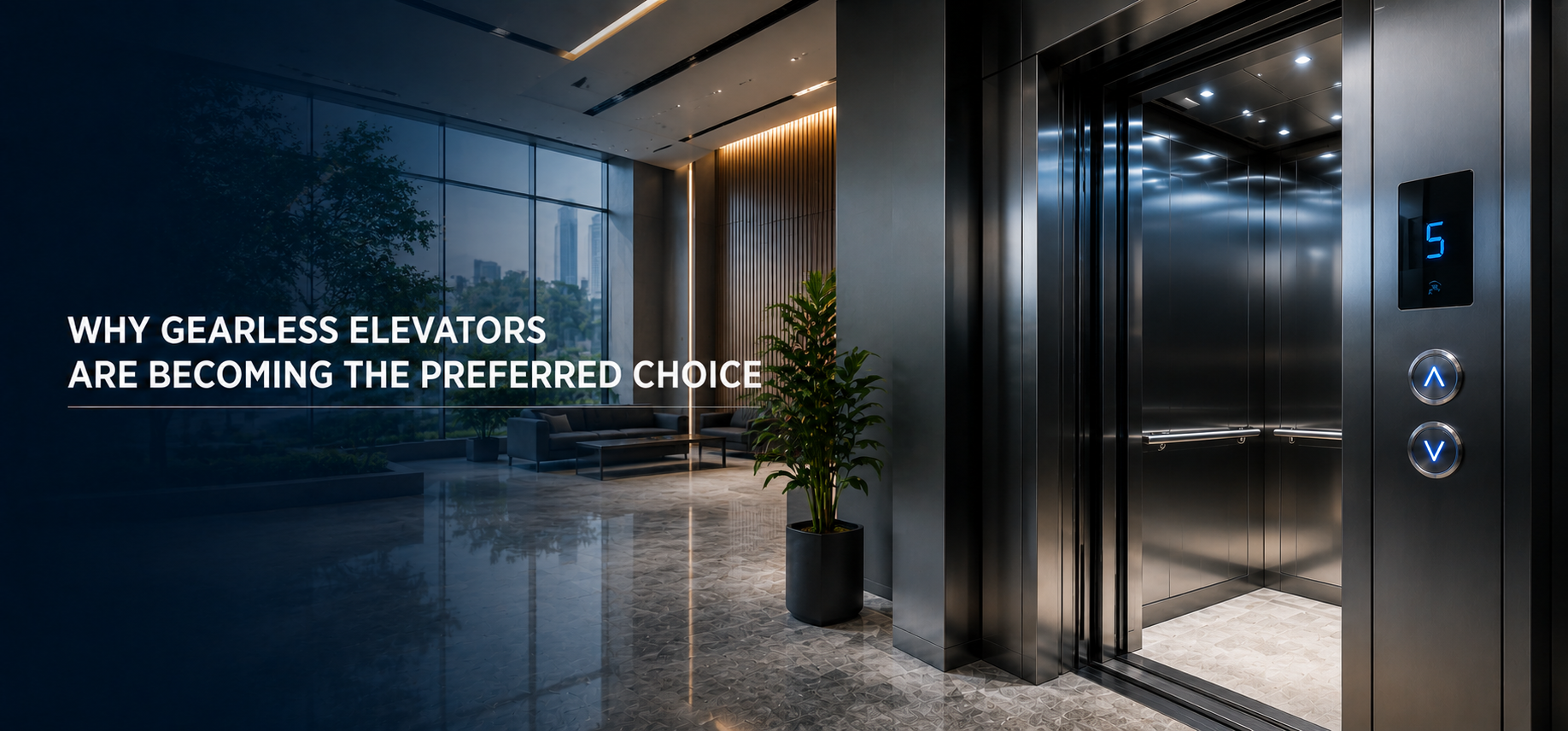
Why Gearless Elevators Are Becoming the Preferred Choice for High-Rise Buildings
High-rise construction has picked up pace across Indian cities, and elevators have had to keep up. Builders want speed, dealers want fewer callbacks, and residents just want a smooth, quiet ride without the building shaking every time the lift starts. So it’s no surprise that gearless elevator machines are becoming the go-to option for taller buildings. The technology itself isn’t brand new, but its adoption has grown a lot in the last few years, and honestly, there’s a solid reason behind that shift.
The Evolution of Elevator Technology
Older elevator systems relied on geared machines, basically a motor connected to a gearbox that drove the hoisting mechanism. These worked fine for low and mid-rise buildings for decades, but they came with their own baggage. Worm gears wear out over time, they need regular lubrication, and they tend to get noisy as buildings age. Maintenance crews would visit more often, which added up in cost and hassle. As towers got taller and speed requirements went up, the industry needed something more efficient, something that could handle the load without breaking down every few months. That’s basically how gearless traction machines found their place in the market. They cut out the gearbox entirely, which changes a lot about how the elevator performs and how much upkeep it needs down the line.
What Exactly Is a Gearless Elevator Machine?
A gearless elevator machine uses a permanent magnet synchronous motor that connects directly to the drive sheave. No gearbox sitting in between, no extra moving parts to wear down over time. The result is a more compact machine that runs cooler and doesn’t lose energy through mechanical friction the way geared systems do. It’s a fairly simple idea when you break it down on paper, but getting it reliable at scale, especially for buildings running dozens of trips a day, took years of engineering refinement. Today’s versions are far quieter and more efficient than what was available even a decade ago.
Why High-Rise Buildings Prefer Gearless Traction Machines
Tall buildings need speed and consistency, and this is where gearless traction machines really pull ahead. They handle higher speeds without the vibration and noise that geared systems tend to generate at that scale, which matters when you’ve got people riding thirty or forty floors every single day. The compact build also means the machine room can be smaller, or in many modern towers, done away with altogether, freeing up space that architects can use elsewhere. Energy consumption drops too, since there’s no gearbox friction eating into the output. For a 20, 30, or 40-storey building, that adds up to a real difference in running costs over the years, not just a marginal saving.
Why Elevator Dealers Prefer Gearless Elevator Machines
For dealers, the appeal is a bit more practical, honestly. Fewer moving parts generally mean fewer complaints once the elevator is installed and running, and that matters a lot in this business. A dealer’s reputation is built on how few callbacks they get, not on how fast they can close a sale. Gearless elevator machines also let dealers pitch a more modern, energy-efficient option to builders who are increasingly asking about running costs upfront. And since these machines are compact, dealers can offer more flexible installation solutions, especially in projects where space planning was tight to begin with. Dealers can also stay ahead of market trends by understanding the latest innovations in gearless elevator technology, enabling them to recommend advanced solutions with smart monitoring, improved energy efficiency, and lower maintenance requirements to their customers.
Key Features to Consider When Selecting a Gearless Traction Machine
Not all gearless machines are built the same, so here’s what’s worth checking before choosing a project:
- Load Capacity and Duty Cycle: Match the machine’s rated load and duty cycle to the building’s actual usage pattern, not just the passenger count listed on paper.
- Efficiency of the Motor: Get a good motor that is efficient because it will help reduce your power bills significantly over time due to its performance in the building.
- Noise and Vibration Levels: A properly built machine will not be noisy when operating at top speed. High vibration levels indicate poor construction in any part of the machine.
- Space Saving Design: Determine if the machine enables machine room-less design so that you have much freedom during the building process.
- Sourcing of Components and Machine Performance: Find out the origin of the main components used in the construction of the machine and its performance record in similar buildings.
Why Partner with MAS Industries?
MAS Industries works exclusively with elevator dealers, not directly with housing societies or end users. Here’s what that partnership actually looks like in practice:
- Reliable gearless elevator machines built for high-rise performance and everyday durability.
- Backend technical guidance for dealers, so you’re not left figuring things out alone on site.
- Support when your customer runs into an issue you’re unable to resolve, MAS steps in with a site visit if needed.
- Consistent supply and technical documentation to help dealers pitch confidently to builders.
Conclusion
Gearless elevators aren’t just a passing trend in the industry; they’re addressing real problems that geared machines struggled with for years, especially in tall buildings where speed, noise, and energy use actually matter to the people living there. For dealers, choosing the right gearless traction machine and the right backend partner makes a genuine difference in how smoothly a project runs, and how few calls come in after handover.
Frequently Asked Questions (FAQs)
- What makes a gearless elevator machine different from a geared one?
In the case of the gearless elevator machine, there is no need for any gearbox, and the motor becomes directly attached to the drive sheave. As a result, there will be much less friction, much quieter operation, and much less maintenance requirements than in case of a geared system.
- Are gearless traction machines suitable for low-rise buildings, too?
Yes, they can be used in low-rise buildings, though their real advantages show up more clearly in mid to high-rise buildings where speed and energy efficiency matter the most.
- Does MAS Industries supply elevators directly to housing societies or builders?
No. MAS Industries works only through elevator dealers. Builders and housing societies get their elevators through their dealer, never directly from MAS.
- Does MAS Industries handle annual maintenance contracts (AMC)?
No, MAS does not offer AMC services. Maintenance and servicing remain entirely the dealer’s responsibility. MAS provides backend technical support and guidance to dealers when needed, including a site visit when a dealer’s customer faces an issue the dealer cannot resolve on their own.
- How do I know if a gearless traction machine is right for my project?
This will all be determined by the height of the building, the number of people expected to travel, and the required speed of the elevators. The most appropriate way to receive a good recommendation before anything is done would be to talk to the machine supplier.


Leave a Reply