
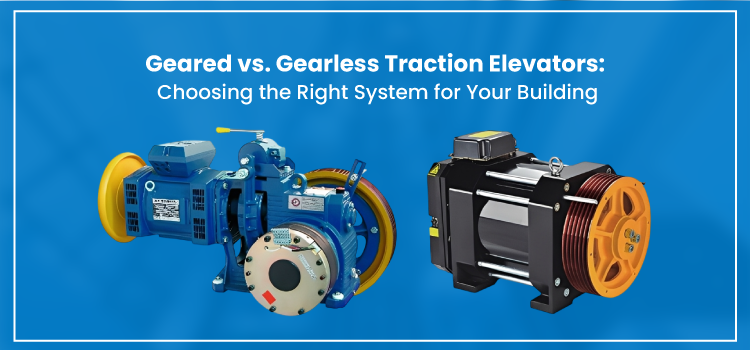
Geared vs. Gearless Traction Elevators: Choosing the Right System for Your Building
Choosing an elevator system is not something most people enjoy doing. It sounds technical, expensive, and kind of dry. But once you start looking into it, you realise how much it affects daily life in a building. The wait time, the ride feel, the sound, and even the power use are all shaped by what’s running behind the doors.
Two types usually come up first in any serious talk. Geared systems and gearless ones. Both use ropes and a motor to move the lift cabin, but they work in slightly different ways. Those differences quietly change how the whole building feels over time.
This article walks you through both options in plain language. No heavy engineering talk, just clear details so you can make sense of the basics before making any choice.
Understanding the Basics of Traction Elevators
A traction lift works by pulling a cabin up and down using steel ropes. These ropes wrap around a motor wheel called a sheave. On the other side of the ropes sits a counterweight which balances the load.
This balance does most of the heavy work. The motor only needs to move the difference between the two weights, not the full cabin weight each time. That’s why traction systems use less power than older hydraulic lifts in tall buildings.
When people mention the term Elevator Traction Machines, they are talking about this whole setup. Motor, ropes, wheel, and counterweight all working together to keep the ride smooth.
The big question then becomes what kind of motor system sits on top of that machine.
What is a Geared Traction Elevator?
A geared system uses a motor that connects to the wheel through a gearbox. That gearbox slows the motor speed down and increases torque. Think of it like a bicycle using gears to make pedalling easier uphill.
In geared traction elevators machine, this gearbox is what allows the lift to pull heavier loads while keeping the motor under control. These systems have been around for a very long time. Many buildings still rely on them every day.
They tend to work well for mid-rise structures like office blocks or apartment buildings that don’t climb too many floors. They also usually cost less at the start, which is why they are still common in older designs.
The trade-off is maintenance. Gearboxes have moving parts that wear down. Oil changes matter. Alignment matters. Over the years, service calls become part of ownership.
What is a Gearless Traction Elevator?
Now we come to the modern version. The motor here connects straight to the wheel without any gearbox in between. That’s where the name comes from.
Gearless Traction Elevators feel different when you ride them. The movement is smoother. The start and stop are softer. There is less vibration because fewer parts are turning.
A gearless elevator machine also takes up less space. No gearbox means the setup stays compact. That’s a big deal in tall buildings where space in the roof room is limited.
These systems work best in high-rise towers. They handle speed well. They deal with heavy traffic better. Over time, they tend to need less mechanical fixing thanks to fewer moving parts.
That’s one of the reasons Gearless Traction Elevators are used so widely in modern skyscrapers.
Side-by-Side Comparison: Geared vs Gearless
Put side by side, the differences become clearer.
A geared system feels solid and proven. It is familiar to technicians. It handles moderate traffic with ease. Yet it consumes slightly more energy and tends to wear a bit faster.
The gearless model feels newer. It’s quieter. It runs faster. It wastes less power. But the cost at the start can be higher.
Both are traction systems. Both move safely. The choice depends more on building needs than on which one is “better.”
Key Factors to Consider When Choosing
The first thing to look at is height. A tall tower usually points toward Gearless Traction Elevators. Shorter buildings can work comfortably with geared setups.
Traffic load also matters. A hospital or shopping mall sees more daily use than a small office block. Heavy use works better with gearless designs.
Budget plays its role too. If funds are tight, geared systems often win early. But long-term operating cost tilts toward gearless.
There’s also sound. Some buildings care about peace. Bedrooms near lift shafts notice noise. Gearless systems stay quieter over time.
Suitability by Building Type and Usage
Offices generally choose based on how many floors they need and how fast they need to work. Hotels like it when things operate quietly. Hospitals want things to start off smoothly with as little shaking as possible.
Residential blocks tend to balance cost and comfort. That’s where both systems still compete.
Factories and warehouses sometimes favour strong geared traction elevators when loads are heavy and travel speed doesn’t matter as much.
High-rise residential towers almost always lean toward Gearless Traction Elevators due to speed and comfort demands.
Cost, Maintenance & Lifecycle Considerations
People often focus on installation price and stop right there. That’s a mistake. Over twenty years, a system tells its true cost story. Power use, parts replacement, and downtime all add up.
A geared lift could be cheap at first, but as the gears wear down, it will cost more. A configuration without gears costs more up front, but it saves money on service later. Downtime also matters. In busy buildings, every hour without lift service costs more than just money. It affects people. Gearless systems tend to face fewer breakdowns because there are simply fewer parts to adjust or replace.
Energy Efficiency, Noise & Comfort
Here is where Gearless Traction Elevators really shine. They consume less electricity and waste less heat. They also operate quietly. That matters in residential towers, hotels, and hospitals. No clunky gear hum. No heavy vibration.
Passengers may not understand what’s happening inside the shaft, but they know when a ride feels better. And that matters. Smooth rides make a building feel higher quality even when nobody talks about the elevator itself. The same elevator machine can change how people judge the entire building experience.
Future Trends and Technological Advances
Looking ahead, most new developments are leaning toward gearless systems. The push for energy efficiency is growing.
Smart monitoring is also becoming involved. Sensors can now keep an eye on performance and guess when anything will go wrong before it does.
Traction without gears are simpler and elevators are easier to connect to automation and data systems.
People are also working on making motors that are better for the environment, materials that are lighter, and brakes that work better.
The elevator is no longer just a metal box moving floors. It’s becoming a system that talks, tracks, and optimises.
Conclusion & Recommendation
There is no one-size answer. Some buildings suit geared models better. Others fit gearless systems perfectly. If your structure is tall, busy, and designed for long-term use, turning toward Gearless Traction Elevators system makes sense. If your project is shorter, quieter, and budget-led, a geared system still does its job well.
The real goal is matching design with use. When elevator choice matches building life, everything feels easier. And that’s the point. A lift should serve quietly, smoothly, and reliably. When it does, nobody notices. And honestly, that’s a good thing.


Leave a Reply