
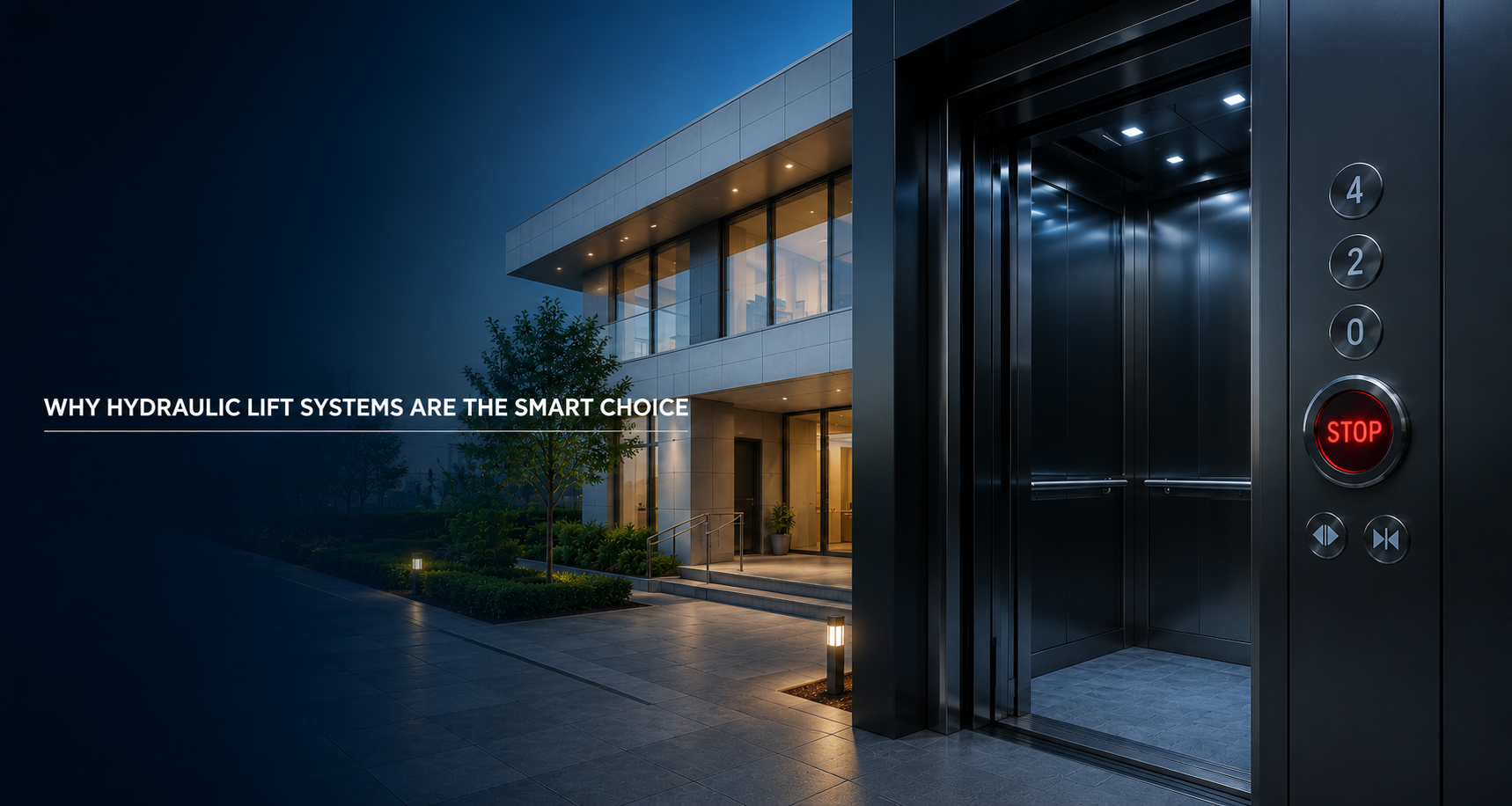
Why Hydraulic Lift Systems Are the Smart Choice for Low-Rise Buildings
Not every building needs a high-speed traction lift running full tilt to the twentieth floor. A lot of low-rise projects, the ones sitting comfortably under six or seven storeys, do just fine with something simpler. That’s basically where hydraulic elevator systems come into the picture. They’re not flashy, but they get the job done reliably, and honestly, for a huge chunk of construction projects out there, that’s exactly what’s needed. Among hydraulic lift manufacturers in Mumbai, this segment has quietly become one of the most consistent performers year after year. This piece walks through how these systems work, where they fit best, and what’s worth knowing before specifying one for a project.
What Is a Hydraulic Lift System?
A hydraulic lift machine works on a fairly straightforward principle. A pump pushes hydraulic fluid into a cylinder. That pressure pushes a plunger that raises the car. To bring it back down, a valve releases the fluid and gravity does the rest. There’s no need for overhead machinery or a rooftop structure, since the mechanism sits at the base of the shaft. It’s a system that’s been around for decades, and it still holds up well for buildings that need dependable performance over blazing speed.
Where Are Hydraulic Lift Systems Used?
Typically, a hydraulic passenger lift is the choice in low-rise structures where the budget and space are as important as the performance. Hydraulic lift for residential buildings works particularly well in independent houses, small apartment blocks, and gated communities that don’t go beyond a handful of floors. On the commercial side, hydraulic lift for commercial buildings shows up often in showrooms, small offices, hospitals, and retail spaces where load capacity matters more than speed. They’re also a common pick for basements and underground parking, mainly because the mechanism doesn’t need overhead space the way traction systems do.
Top Advantages of Hydraulic Lift Systems
There’s a reason hydraulic lift benefits keep coming up with builders working on smaller projects. Here’s what tends to matter most:
- Lower Installation Cost: Hydraulic systems generally cost less to install than traction lifts, which matters a lot on tighter project budgets.
- Stability in Movement: With the smooth and even movement of the plunger, the ride will not be jarring, unlike the ride on a poorly maintained cable system.
- No Overhead Machinery Required: Because the machine is located at the bottom, there is no need for machine rooms on top of buildings.
- Higher Load Capacity: The hydraulic lift has higher load capacity in comparison to its size. Thus, it is useful for carrying bulky cargo or passengers.
- Easy Installation: The lift is suitable for areas where space restrictions do not allow installing a traction lift.
Hydraulic Lift Systems vs Traction Lift Systems
So how do the two actually compare on paper? Here’s a quick side-by-side look:
| Feature | Hydraulic Lift | Traction Lift |
| Ideal Building Height | Up to 6-8 floors | Any height, including high-rises |
| Speed | Lower, around 0.4-1 m/s | Higher, suits fast-moving traffic |
| Installation Cost | Generally lower upfront | Higher upfront investment |
| Machine Room | Small room or nearby space needed | Compact or machine room-less options |
| Energy Use | Higher, pump runs on demand | Lower, more energy efficient |
| Maintenance | Requires regular fluid and seal checks | Comparatively lower long-term upkeep |
Essential Components of a Hydraulic Lift System
The hydraulic lift consists of a limited number of major parts which one should be aware of for effective repairs and design:
- Hydraulic pump: This device supplies hydraulic fluid to the cylinder and generates the pressure which helps lift the car.
- Cylinder and plunger: These parts operate within the cylinder turning the hydraulic pressure into the lifting process.
- Power supply and motor: They drive the hydraulic pump and control the quantity of the fluid in the system.
- Control board: It controls car calls, levelling of the floor and interlocking during the lift ride.
- Fluid reservoir: It stores the hydraulic fluid and must be regularly inspected to prevent contamination.
- Safety valves: They control fluid flow during the lowering of the lift and prevent it from any pressure change.
Factors to Consider Before Choosing a Hydraulic Lift
Choosing the correct unit does not depend solely on cost. Here are a few important considerations before settling for a particular lift system:
- Building Height and Number of Floors: Hydraulic systems are recommended up to six or eight floors. Beyond that, traction systems outperform in terms of speed and efficiency.
- Anticipated Passenger/Load Traffic: A busy building will require faster operation, while low to medium passenger traffic is perfectly okay for hydraulics.
- Depth of Pit and Availability of Space: Traditional holed systems demand a deep pit for their cylinders; hence, the depth of water table and available space should be considered.
- Holed and Holeless Systems: Holeless systems do not demand a deep pit; hence, they work great when water tables or excavations are an issue.
- Future Maintenance Access: Ensure there is proper access to the machine room/pump unit of your choice in future.
The performance of any hydraulic elevator depends on the quality and coordination of its components. Read our guide on Essential Hydraulic Elevator Parts and How They Work Together to learn more.
Maintenance Tips for Hydraulic Lift Systems
- Fluid levels should be frequently checked and maintained in order to avoid overburdening of the pump.
- The seals and the hoses should also be checked for possible leakage, since a bad seal often causes malfunctions.
- It is recommended to clean the pump and motor from time to time, especially when the lift is mounted in basements filled with dust.
- Safety valves should be checked in order to make sure the process of descending happens smoothly and stops at the right place.
- Professional service should be organized at certain intervals and not because of any visible malfunctions.
Why Choose MAS Industries for Hydraulic Lift Systems?
When it comes to picking a supplier, build quality and backend support end up mattering more than most people expect upfront. Here’s what sets MAS Industries apart:
- Recognised among hydraulic lift manufacturers in Mumbai for consistent build quality across projects.
- A solid lineup of hydraulic lift machine options suited to different building heights and loads.
- Technical guidance and documentation that make planning and installation easier.
- Responsive backend support whenever a technical issue on site needs expert input.
- Years of manufacturing experience that show in the consistency of every unit produced.
Frequently Asked Questions (FAQs)
- How long do hydraulic lift systems typically last?
Proper maintenance will enable it to last from 20 to 25 years while the seals and hoses may need to be replaced earlier.
- Are hydraulic lifts more affordable than traction lifts?
The answer is largely yes, especially in cases of low-rise structures. The initial installation cost is relatively lower compared to that of the pump that runs on electricity.
- Can a hydraulic lift be installed without a deep pit?
There are variants without holes, for those cases when construction of a deep hole under the cylinder is impossible.
- What is the typical speed range for a hydraulic passenger lift?
Their average speed is from 0.4 to 1 m/s, which is perfect for the case of low-rise structures with a moderate level of traffic.
- How do I find reliable hydraulic lift manufacturers in Mumbai?
The main thing you need to look for is a good reputation and prompt customer service for all inquiries regarding installation and service.
Conclusion
Hydraulic lift systems aren’t going anywhere anytime soon, and honestly, there’s no real reason they should. For low-rise buildings, they hit a sweet spot between cost, reliability, and straightforward mechanics that traction systems just can’t match at that scale. A residential block or a small commercial complex, either way, getting the fundamentals right, from choosing the right components to picking a manufacturer with solid backend support, makes all the difference in how the system performs over its lifetime.


Leave a Reply