
Gearless Elevator Machine: How It Works, Benefits and Applications
Modern elevator systems need to deliver smooth travel, reliable operation, efficient power consumption and compact installation. One of the most important components responsible for this performance is the gearless elevator machine.
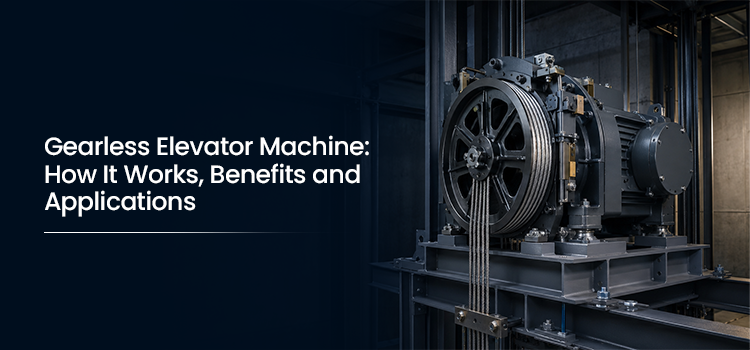
Gearless technology is now a widely used solution for modern passenger elevators, commercial buildings, residential towers and machine-room-less elevator systems. Unlike traditional geared machines, a gearless traction machine connects the motor directly to the traction sheave, with no gearbox sitting between them.
This simpler drive arrangement tends to give smoother operation, fewer mechanical losses, lower noise and a more compact machine design overall.
That said, not every gearless machine suits every elevator project. Load capacity, speed, suspension arrangement, sheave size, motor output and building requirements all need to be weighed up before picking the right machine.
This guide walks through the types of gearless machines, their key features, and what elevator professionals should look at before making a selection.
What Is a Gearless Elevator Machine?
Gearless traction machine: A traction machine in which the traction sheave is driven directly by the electric motor.
The traditional geared traction system has the motor sending power through a gearbox before the traction sheave. A gearless system does away with that intermediate gearbox.
The basic arrangement looks like this:
Motor → Traction Sheave → Suspension Ropes → Elevator Car and Counterweight
With fewer mechanical transmission parts in the mix, gearless machines can move the elevator more efficiently and precisely.
Permanent magnet synchronous motors show up in most modern gearless elevator systems because they deliver high torque even at relatively low rotational speeds.
How Does a Gearless Traction Elevator Work?
Gearless traction elevators operate by the friction between the drive sheave and the suspension ropes.
The elevator car is connected to a counterweight by suspension ropes. Suspension ropes are passed over the traction sheave attached to the traction machine of the elevator.
When the motor turns the sheave:
- The elevator car moves upward or downward.
- The counterweight moves in the opposite direction.
- The counterweight offsets a substantial portion of the elevator load.
- The traction machine handles acceleration, travel speed and stopping.
Because the motor drives the traction sheave directly, there’s no need for a reduction gearbox.
Modern variable-frequency drives add another layer of control over motor speed and torque, which helps with smooth acceleration and accurate floor levelling.
Main Types of Gearless Elevator Machines
Gearless elevator machines can be grouped by motor arrangement, suspension configuration, installation method and elevator application.
Understanding these differences helps elevator manufacturers and dealers pick a machine that actually fits the technical needs of a project.
1. Permanent Magnet Gearless Traction Machine
Permanent magnet synchronous motor technology shows up in most modern gearless elevator machines.
The permanent magnets inside the motor help generate the magnetic field needed, without relying entirely on electrically energised rotor windings.
Some of the benefits worth noting:
- Compact motor size
- High operating efficiency
- High torque capability
- Low-speed operation
- Smooth elevator movement
- Reduced mechanical transmission losses
These machines are commonly found in passenger elevators and MRL elevator systems.
2. Machine-Room-Less Gearless Machine
Machine-room-less, or MRL, elevators skip the traditional dedicated machine room above the elevator shaft.
Compact gearless machines work particularly well in this arrangement, since the machine can often be fitted within or around the elevator shaft structure, depending on the lift design.
MRL gearless systems tend to help projects where:
- Building space is limited
- Extra machine-room construction isn’t wanted
- Architects want more design flexibility
- Efficient shaft utilisation matters
Because of these advantages, gearless technology is closely tied to modern MRL elevators.
3. Machine-Room Gearless Traction Machine
Gearless machines aren’t limited to machine-room-less elevators.
They can also be installed in systems that have a dedicated machine room.
Machine-room configurations may still be the better fit for certain elevator capacities, speeds, maintenance needs or project designs.
The right arrangement comes down to the full elevator specification, not just the traction machine on its own.
4. Gearless Machines for Different Passenger Capacities
Gearless machines come in different sizes to match different passenger and load requirements.
For instance, a machine built for a six-passenger elevator will have different motor, load and traction requirements than one built for an eight-passenger or higher-capacity lift.
So the machine’s rated load needs to be matched carefully to the elevator design.
5. Gearless Machines for Different Suspension Arrangements
Traction elevators can use different suspension arrangements.
A common one in gearless elevator applications is 2:1 suspension.
In a 2:1 system, the relationship between rope movement and elevator-car movement can help reduce the load the traction machine has to deal with.
Suspension configuration affects:
- Machine torque requirements
- Rope arrangement
- Sheave design
- Elevator speed
- Shaft layout
- Overall system efficiency
So the suspension ratio is something to factor in when selecting the machine.
Key Features of a Gearless Elevator Machine
When comparing gearless machines, it helps to look past the passenger capacity listed in the product description.
Several specifications directly affect how well an elevator traction machine actually performs.
Compact Construction
Without a gearbox, the machine can have a much more compact mechanical structure.
Compact machines are especially useful for MRL elevators and projects where machinery space is tight.
Smooth Ride Performance
Direct motor-to-sheave operation, paired with modern elevator drives, allows for precise control over acceleration and deceleration.
That translates into smoother passenger movement and more accurate stopping.
Lower Mechanical Losses
A geared system loses additional energy through the gearbox.
Take the gearbox out, and those transmission losses drop too, which can improve overall system efficiency.
Reduced Number of Moving Components
Without a gearbox, there are fewer transmission components sitting between the motor and sheave.
That simplifies the mechanical drive arrangement.
Lower Operating Noise
Gearboxes can add mechanical noise and vibration.
A well-designed gearless machine tends to run quieter as a result.
This matters most in places like:
- Residential towers
- Hospitals
- Hotels
- Premium commercial developments
High Torque at Low Speed
Modern permanent magnet motors can generate the torque needed to rotate the traction sheave without relying on high motor speeds followed by mechanical gear reduction.
Compatibility With Modern Elevator Drives
Gearless machines pair well with variable-frequency elevator drives, which give precise control over motor speed, torque and stopping characteristics.
Important Gearless Elevator Machine Specifications
Before settling on a machine, elevator professionals should go through its technical specifications carefully.
Rated Load
The machine has to support the required elevator capacity.
Passenger capacity is usually expressed both as a number of passengers and a rated weight.
For example:
- 8 passengers = approximately 544 kg in certain machine configurations.
The exact elevator design should always be what determines the required machine capacity.
Elevator Speed
The machine needs to suit the elevator’s specified operating speed.
A machine built for a 1.0 m/s elevator shouldn’t automatically be assumed suitable for another elevator with a very different speed requirement.
Motor Output
Motor power is generally given in kilowatts.
The required output depends on things like:
- Rated load
- Elevator speed
- Suspension arrangement
- System efficiency
- Duty requirements
Current Rating
The machine’s electrical current needs have to be compatible with the controller, drive and electrical installation.
Traction Sheave Diameter
Sheave diameter is another spec worth checking closely.
It shapes the rope arrangement and the overall traction system design.
Number and Diameter of Ropes
Different machines may use different rope diameters and different numbers of suspension ropes.
Because of this, the traction system should be engineered as a whole rather than picking the machine on its own.
Geared and Gearless Traction Elevator: What Is the Difference?
Knowing the difference between a geared and gearless traction elevator helps when choosing the right drive system.
Geared Traction Elevator
A geared machine typically follows this path:
Electric Motor → Gearbox → Traction Sheave
The gearbox reduces motor speed while boosting torque at the drive sheave.
Geared machines can still be a good fit for plenty of elevator applications, depending on load, speed, cost and building requirements.
For a broader understanding of different machine configurations, see our guide to elevator traction machines.
Gearless Traction Elevator
A gearless system follows this path instead:
Electric Motor → Traction Sheave
The motor drives the sheave directly, with no gearbox in between.
This can give you:
- Reduced mechanical transmission losses
- Compact installation
- Smooth operation
- Lower mechanical noise
- Fewer transmission components
Neither option should be picked just because one technology happens to be newer.
The elevator’s actual technical requirements should decide whether a geared or gearless machine makes more sense.
Gearless vs Geared Elevator Machine
| Factor | Gearless Machine | Geared Machine |
| Gearbox | Not required | Required |
| Motor connection | Direct to traction sheave | Through gearbox |
| Machine size | Generally compact | Generally larger |
| Mechanical complexity | Lower | Higher |
| Noise | Generally lower | Can be higher |
| Energy losses | Lower transmission losses | Additional gearbox losses |
| MRL suitability | Very suitable | Depends on design |
| Maintenance considerations | No gearbox maintenance | Gearbox requires attention |
| Application | Modern low, mid and high-rise systems depending on design | Various low and mid-rise applications depending on design |
The final choice should always come down to elevator engineering requirements, not this table alone.
How to Select the Right Gearless Elevator Machine
Picking a gearless elevator machine means weighing up several project parameters together, not one at a time.
1. Determine the Required Elevator Capacity
Start with the rated elevator load.
Consider:
- Passenger capacity
- Cabin weight
- Rated load
- Counterweight arrangement
The machine needs enough torque for the elevator system it’s going into.
2. Confirm the Required Speed
Building height, passenger traffic and elevator application all shape the required speed.
Residential elevators may need different speeds than commercial office towers or high-traffic buildings.
3. Check the Suspension Ratio
Confirm whether the elevator uses:
- 1:1 suspension arrangement
- 2:1 suspension arrangement
- Other engineered configuration
The machine has to match the suspension design being used.
4. Review Sheave and Rope Requirements
Confirm:
- Traction sheave diameter
- Rope diameter
- Number of ropes
- Rope arrangement
These specifications all need to work together correctly.
5. Check Motor Power and Current
Make sure the motor output and current requirements line up with the selected elevator drive and controller.
The whole electrical system should be designed with this in mind.
6. Consider Available Installation Space
Space matters a lot in MRL elevators especially.
Check:
- Shaft dimensions
- Machine location
- Maintenance access
- Headroom
- Structural mounting requirements
A compact machine can be a real advantage when the shaft doesn’t have much room to spare.
7. Consider Elevator Usage
An elevator that runs occasionally in a small residential building has very different demands than a lift making hundreds of trips a day in a commercial property.
Consider:
- Expected daily starts
- Traffic volume
- Building type
- Operating hours
- Passenger demand
8. Review Braking Arrangement
The braking system is a critical part of the traction machine assembly.
Both the machine and the brake need to meet the requirements of the full elevator design and applicable standards.
9. Check Drive Compatibility
Modern gearless machines usually run with suitable variable-frequency elevator drives.
Confirm compatibility between:
- Motor
- Encoder
- Drive
- Controller
- Brake system
Poor matching between these components can hurt ride quality and overall elevator performance.
10. Choose a Reliable Elevator Machine Supplier
Machine selection shouldn’t be treated like an isolated product purchase.
Technical support matters when it comes to nailing down the right capacity, speed, sheave configuration and electrical characteristics.
Working with an experienced elevator component supplier can help dealers match the machine to what the complete lift system actually needs.
Where Are Gearless Elevator Machines Commonly Used?
Gearless technology fits especially well in taller developments, where smooth operation, efficiency and reduced mechanical complexity really count. Read more about gearless elevators for high-rise buildings.
Common applications include:
- Residential apartment buildings
- High-rise residential towers
- Commercial office buildings
- Shopping centres
- Hotels
- Hospitals
- Institutional buildings
- Premium residential developments
- Machine-room-less elevators
Whether a gearless machine suits a project depends on the required load, speed, travel height and elevator configuration.
Are Gearless Machines Only for High-Rise Elevators?
No.
Gearless traction technology is closely linked with taller buildings because of its efficiency and performance advantages, but modern compact gearless machines work just as well in low-rise and mid-rise elevator systems.
For example, MRL passenger elevators in residential buildings may use compact gearless machines even when the building itself isn’t especially tall.
So the decision should come down to system requirements, not building height on its own.
Gearless Elevator Traction Machines from MAS Industries
MAS Industries offers gearless elevator traction machines for a range of elevator capacities and system requirements.
Available machine configurations cover different:
- Passenger capacities
- Rated loads
- Motor outputs
- Current ratings
- Speeds
- Traction sheave dimensions
For example, one MAS gearless machine configuration is built for an eight-passenger, 544 kg capacity elevator running at 1.0 m/s, with a 3.56 kW output and a 320 mm traction sheave.
These technical differences are exactly why the machine should be selected based on the complete elevator design, not just passenger capacity.
View the Gearless Elevator Traction Machine range from MAS Industries for available models and technical specifications.
Choosing the Correct Machine Improves the Complete Elevator System
The traction machine is one of the most important parts of any elevator system.
A well-selected gearless elevator machine can deliver smooth travel, compact installation, efficient operation and precise elevator control.
But getting the selection right takes more than just choosing between geared and gearless technology.
Elevator professionals should evaluate:
- Rated load
- Passenger capacity
- Speed
- Suspension ratio
- Motor output
- Current requirement
- Sheave size
- Rope configuration
- Available installation space
- Elevator drive compatibility
- Building usage
Weighing these factors together makes it much easier to land on an elevator traction machine that actually matches the project’s engineering requirements.
For elevator dealers and system integrators, working with a manufacturer that can supply both elevator machines and supporting lift components can also make component selection and system integration go more smoothly.
Frequently Asked Questions
What is a gearless elevator machine?
A gearless elevator machine is a traction machine where the electric motor drives the traction sheave directly, without a gearbox between the motor and sheave.
What is a gearless traction elevator?
A gearless traction elevator uses a gearless traction machine to move the elevator car and counterweight through suspension ropes running over a traction sheave.
Are gearless lifts and elevators suitable for residential buildings?
Yes. Gearless machines work well in residential elevators, particularly in modern machine-room-less systems. Selection depends on capacity, speed, travel height and elevator design.
What specifications should be checked before buying a gearless elevator machine?
Main specifications include rated load, number of passengers, elevator speed, motor power, current, traction sheave diameter, rope arrangement, suspension ratio and compatibility with the elevator drive.


Leave a Reply