
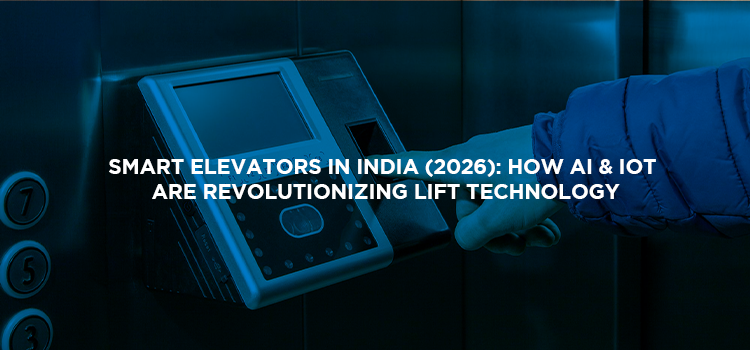
Smart Elevators in India (2026): How AI & IoT Are Revolutionizing Lift Technology
AI enabled lifts in India 2026: Predictive maintenance, real time monitoring, touchless controls and energy efficient operations with AI and IoT. It saves downtime, boosts safety and improves traffic efficiency in high-rise buildings.
The Rise of Intelligent Vertical Mobility
India’s urban infrastructure is undergoing fast transition. Skyscrapers have become commonplace in most major areas such as Mumbai, Pune and Bangalore. Elevators have changed from simple vertical transit systems to sophisticated data driven mobility solutions.
By 2026, AI and IoT will transform the average lift into a smart system that predicts failures, optimizes efficiency and enhances user experience in real-time. This is transforming the way buildings work and how people move through them.
What Is a Smart Elevator in 2026?
Smart elevator is an enhanced lift system with
- AI based decision making
- Real-time IoT connectivity
- Data Analytics for Performance Optimization
Unlike normal elevators, smart lifts constantly collect and analyze data to:
- Increase of efficiency
- Reduce downtime
- Enhance safety
They’re far more efficient than conventional systems since they learn from user behavior and building traffic.
Core Technologies Powering Smart Elevators
1. AI-Based Predictive Maintenance
AI tracks important elements such as:
- Engine temperature
- Door operation
- Vibrational states
It forecasts flaws in advance, so maintenance staff have an opportunity to fix things before they break down. This drastically reduces down time, increases reliability.
2. IoT Real-Time Monitoring
Internet of Things in Elevators involves integration of elevators with cloud computing technology to allow for the following:
- Monitoring of events
- Remote diagnostics
- Real-time alerts
Dashboards provide facility managers the ability to monitor several elevators at once.
3. AI Traffic Optimization
AI analyses passenger behaviour, peak times and demand for floors to:
- Reduce waiting time
- Elevator scheduling optimization
- Passenger flow improvement
This is particularly useful in high-rise commercial buildings and malls.
Traditional vs Smart Elevators (2026 Comparison)
| Feature | Traditional Elevators | Smart Elevators (2026) |
| Maintenance | Reactive | Predictive (AI-based) |
| Control System | Basic | AI + Cloud Integration |
| User Interface | Buttons | Voice, App, Gesture |
| Energy Usage | High | Regenerative (up to 40% saving) |
| Wait Time | High | Optimized (AI routing) |
| Security | Manual | Biometrics & AI |
Key Innovations Driving the Industry in 2026
Destination Control Systems (DCS)
Passengers press the floor button when they get into the lift. AI aggregates clients to similar levels, preventing unnecessary stops and drastically lowering waiting time.
Touchless & Voice Control Elevators
Today’s elevators can now do:
- Voice directions
- Gesture control
- Access with mobile apps
These qualities improve hygiene, accessibility and convenience.
Energy-Efficient Regenerative Drives
Smart building elevators make electricity as they go down and feed the electricity back into the building’s power grid so as to reduce total energy consumption by as much as 40%.
Smart Elevator Cost in India (2026)
Smart lift technology 2026 installation cost in india depends on several factors including height of the building, load capacity and level of technological integration.
Average Pricing:
- Smart basic lift: ₹8-12 lakhs
- Mid-range (AI+IOT) : ₹12-25 Lakh
- Premium high rise system: ₹25-50 lakh and above
Factors Affecting Cost:
- Number of Levels
- Smart features (AI, IoT, DCS)
- Difficulty of installation
- Customization requirements
Smart elevators cost more to buy at first, but they can save you money over time since they use less energy and need less maintenance. Explore our advanced elevator maintenance services for smart buildings
City-Wise Smart Elevator Adoption in India
Mumbai – High-Rise Efficiency
The smarter elevators would cut down the waiting time for passengers when there is much traffic in tall buildings.
Bangalore – Tech Integration Hub
Access to elevators would be controlled through access cards and phone apps.
Pune – Industrial & Residential Growth
Industries often use IoT-enabled lifts to keep track of the load and avoid damage to the equipment.
Looking for reliable elevator components and lift solutions? Partner with MAS Industries for quality-driven engineering and global-standard manufacturing.
Top Smart Elevator Companies in India (2026)
Key companies providing smart elevator solutions include the following:
- Otis India Ltd.
- KONE India,
- Schindler India
- Johnson Lifts
- Mitsubishi Electric India
They deliver latest infrastructure with AI enabled and IoT enabled elevator systems.
AI in Elevator Safety & Emergency Systems
Modern smart elevator includes:
- AI for anomaly detection
- Automatic emergency descent system (AEDS)
- Automatic Rescue Devices (ARD) Smart
- Biometric access systems
These traits provide a higher level of safety and a quick response in case of disasters.
Data Analytics for Building Owners
Smart elevators produce useful data, including:
- Usage patterns
- Rush hour traffic
- Energy consumption
- Service records
The data helps owners of buildings operate them more efficiently and at less expense.
ROI of Smart Elevators for Building Owners
Invest wisely in elevators and reap substantial benefits:
- 30-40% lower maintenance costs
- 20% – 40% less energy
- Reduced downtime
- Increased property values
Smart elevators are not just an expense, they are an investment for the long-term.
Enhanced User Experience (2026 Trends)
Today’s elevators now offer:
- Refreshes on smart mirrors
- Custom Lighting
- Fast connection
- App-controlled
It transforms elevators into dynamic digital spaces.
Smart Elevators & Green Building Goals
Smart elevators support sustainability by:
- Operation for energy saving
- Lower carbon footprint
- Power and wisdom
They are used in Green building certifications such as IGBC & LEED.
Machine Room-Less (MRL) Elevators
MRL elevators are getting so popular because:
- Space saving design
- Lower installation costs
- High efficiency of energy
Ideal for contemporary residential and commercial buildings.
Can You Upgrade Old Elevators to Smart Systems?
Yes, existing elevators can be retrofit with:
- AI controllers
- Internet of Things (IoT) sensors
- Smart Monitoring System
This process, called elevator modernization, is cheaper than replacing the entire system.
Challenges of Smart Elevator Technology
But like everything there are some bad ones with all of the good:
- High initial investment
- Dependence on Internet Connectivity
- Threats to Cyber Security
- Training requirement maintenance
But with good planning and the correct technology, they can be overcome.
Choosing the Right Smart Elevator Solution
Think about this before you build a smart elevator:
- Building height and traffic
- Return on Investment and Budget
- Necessary attributes
- Systems integration building
We’ll select the right system, and we’ll make sure it runs smoothly over time.
Future of Elevators Beyond 2026
Future elevators will include:
- AI Enabled Autonomous Systems
- Magnetic Levitation Technology (Maglev)
- Movement in several directions
- Smart cities integration
Elevators will be an important part of smart urban infrastructure.
Conclusion
Smart Elevators in India: Reinventing Modern Infrastructure AI and IoT integration is transforming elevator safety, speed and efficiency.
As urbanization increases, smart elevator technology is the need of the hour for future ready structures and sustainable growth.
FAQs
Q1: What is the cost of installing a smart elevator in India?
Depending on features, building size and integration of technology, it costs ₹8 lakh to ₹50 lakh
Q2: How do smart elevators reduce downtime?
AI for predicting faults in advance and preventive maintenance
Q3: Can old elevators be upgraded to smart systems?
Yes, by modernizing the elevator using AI and IoT technologies.
Q4: Do smart elevators save electricity?
Yes regenerative drives can save up to 40% of energy.


Leave a Reply