
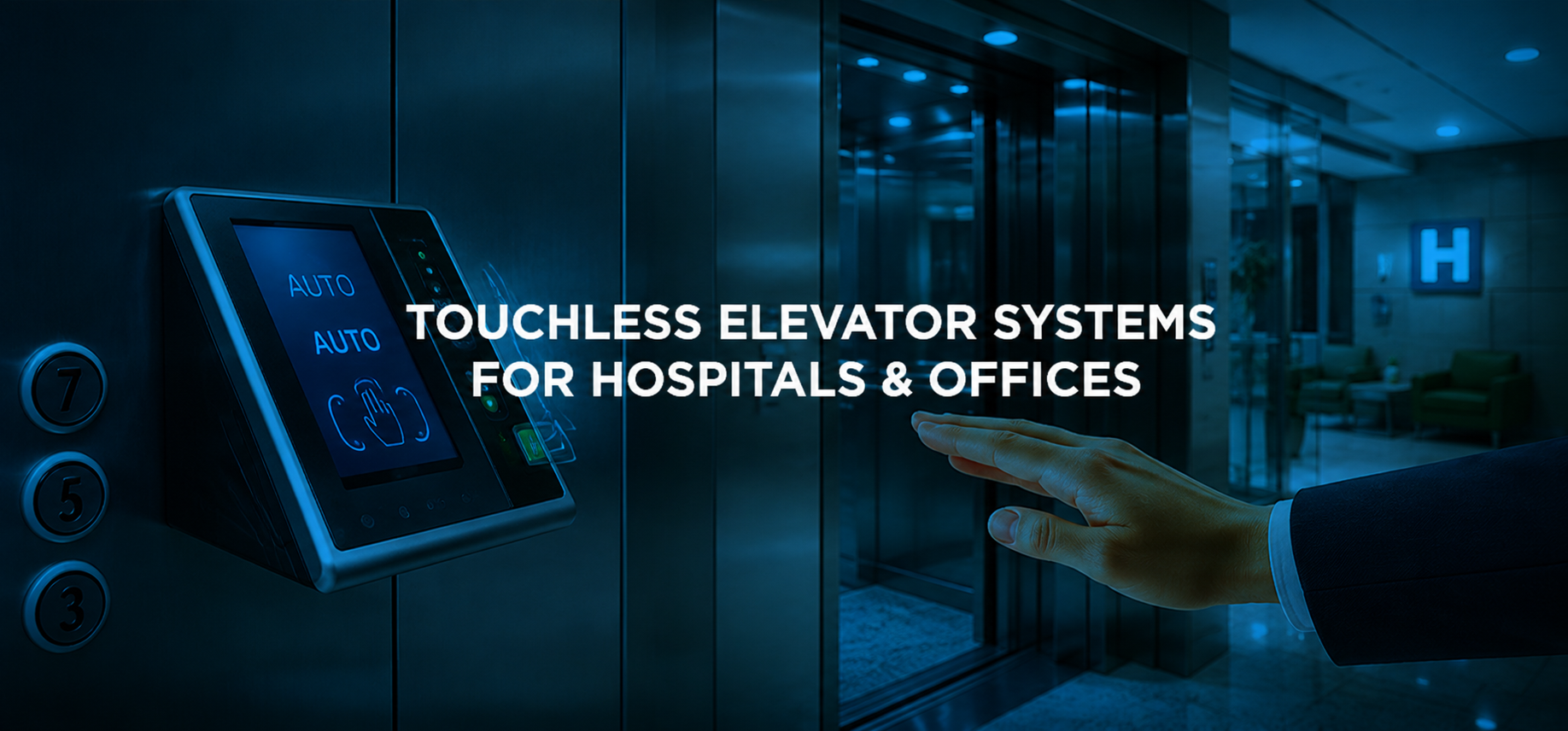
Touchless Elevator Systems for Hospitals & Offices
Quick Answer
Touchless elevators employ the use of sensors or access controls and mobile applications to enable individuals to ride the elevator without having to press any buttons. Touchless elevator systems have been seen as an innovative way to control lifts.
What Are Touchless Elevator Systems?
Touchless elevator systems are innovative ways to control lifts by minimizing the need for physical contact. These systems enable users to call and control the lifts without pressing any buttons; they can do so using gestures, mobile devices, or access cards.
They are becoming popular in hospitals and office buildings because elevators there are frequently used by many people. Touchless lift systems help to control the transmission of germs and improve safety standards.
They also make up part of the intelligent building system, making elevators smarter, faster, and simpler to operate.
How Do Touchless Elevators Work?
The contactless elevator combines various technologies that enable the contactless experience.
Movements are captured by sensors that enable people to select their destinations without touching any buttons. Passengers can use mobile apps to summon elevators and choose their destinations before getting inside the elevator. The access card or RFID-enabled device will transport you to your destination floor directly.
Advanced models adopt the destination control system, which categorizes people based on similar destinations.
Why Are Touchless Elevators Important?
Why are touchless elevators important? They increase hygiene and safety in shared environments.
One common place where germs can be found is elevator buttons, because there are hundreds of people using them daily. The risk of disease transmission can exist in places like hospitals.
A touchless system makes it possible for a company to provide a secure and up-to-date working atmosphere for its employees. It is important for smart buildings that emphasize effectiveness and user experience.
Key Benefits of Touchless Elevator Systems
1. Better Hygiene
The less contact there is, the lower the chances are of transmitting bacteria and viruses.
2. Improved Convenience
Elevators can be operated swiftly by users via gestures or mobile devices.
3. Faster Movement
Smart systems reduce waiting times and increase traffic flow.
4. Increased Security
Access control provides that only the authorized personnel can enter specified floors.
5. Lower Maintenance
Less physical use implies fewer repairs and more durable parts.
Use of Touchless Elevators in Hospitals
Touchless elevators are highly beneficial in hospitals that require high hygiene standards.
They minimize contact surfaces and the danger of infection. They also help in the swift and safe transfer of patients, staff, and equipment.
Access control is used to restrict access to areas like intensive care units and operating rooms only to those who have authorization to access them. This will increase the efficiency as well as the security levels.
Use of Touchless Elevators in Offices
Touchless elevators are increasing safety as well as efficiency in office environments.
The elevators are more efficient in reducing traffic congestion during peak times. Workers can conveniently move from one level to another using access cards or applications.
Touchless devices enhance the whole experience in modern workplaces, providing safety and efficiency.
Can Touchless Systems Be Installed in Existing Elevators?
Yes, touchless elevator systems can be installed in existing elevators.
Many technologies, such as sensors and mobile integrations, can be retrofitted without replacing the complete lift system. This makes it an affordable improvement for older buildings.
The companies can increase safety and efficiency without any huge construction work.
Technologies Used in Touchless Elevators
Some of the common technologies are:
- Gesture-controlled motion sensors
- Remote operation mobile apps
- RFID or access cards for automatic selection of floors
- Destination control systems for improved traffic management
They work together to provide a seamless, intelligent elevator experience.
Future of Touchless Elevator Systems
Innovations are making touchless elevators even better.
In the future, we will see AI-based systems that will forecast consumption patterns, faster elevators, and full integration with smart buildings.
These solutions will make buildings safer, more efficient, and easier to use.
Conclusion
Touchless elevator systems are a must-have in modern structures. Access control is used to restrict access to areas like intensive care units and operating rooms only to those who have authorization to access them. This will increase the efficiency as well as the security levels.
Touchless elevators are increasing safety as well as efficiency in office environments.
FAQs
What is a touchless elevator system?
It is a technique that enables people to operate elevators without touching buttons.
Are touchless elevators safe?
Yes, they cut down on touch and help stop diseases from spreading.
Can old elevators be upgraded?
Yes, touchless features can be retrofitted into existing elevators.
Do touchless elevators save time?
Yes, they make things more efficient and minimize wait time.


Leave a Reply