
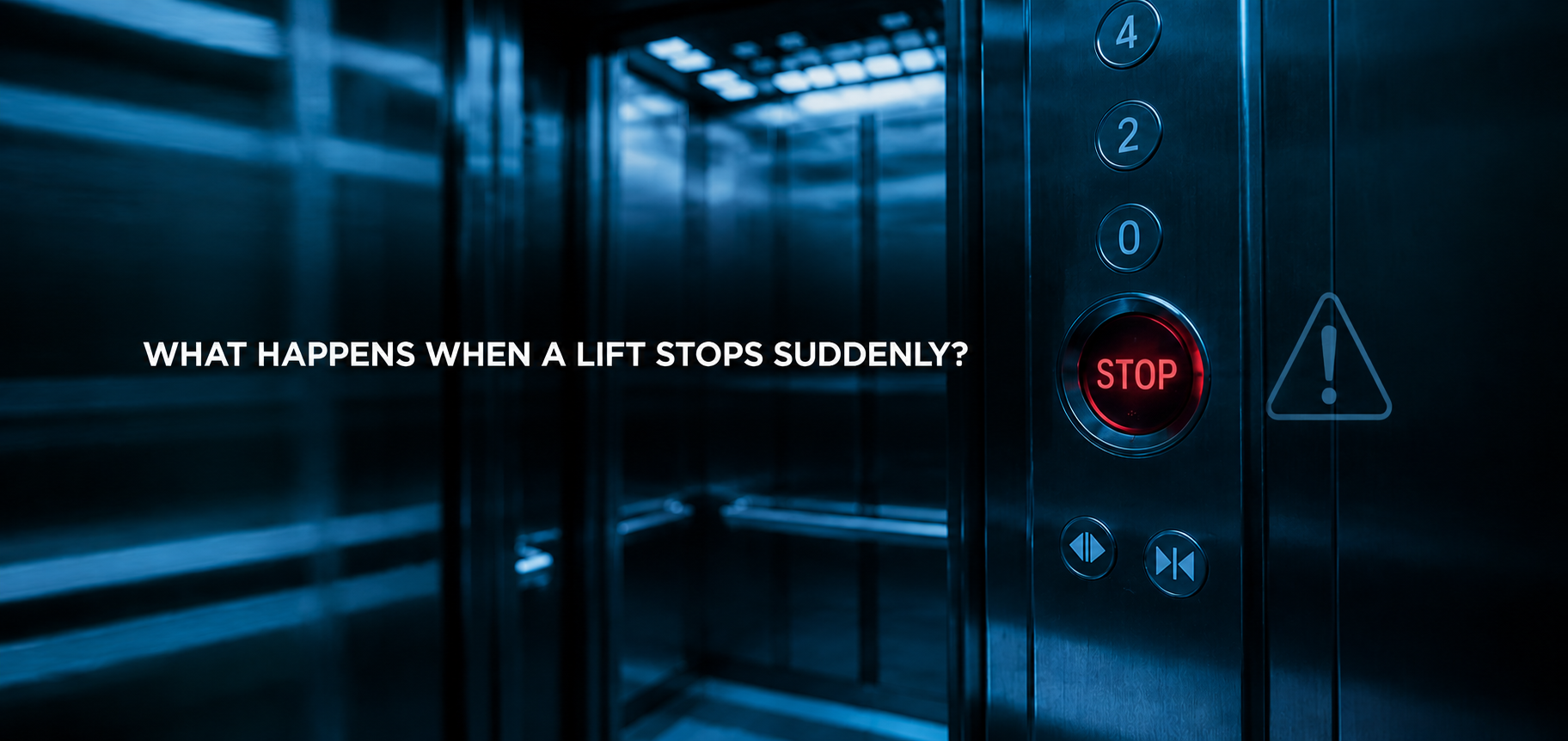
What Happens When a Lift Stops Suddenly? Safety Tips for Passengers
Introduction
Getting stuck in a lift is one of those experiences that sounds minor until it actually happens to you. The cabin stops, the floor numbers freeze, and suddenly you’re trying to stay calm in a small metal box with no obvious way out. For most people, the first instinct is to press every button available, which is fine, but knowing what to actually do in those first few minutes makes a real difference. Lift not working situations are more common than most building owners would like to admit, and how passengers respond determines how safe and smooth the rescue process ends up being.
Understanding Why Lifts Stop Suddenly
Lifts don’t usually stop for one dramatic reason. Most breakdowns are caused by fairly mundane issues that have accumulated over time. Power supply fluctuations, overloaded cabins, sensor faults, worn cables, or a software error in the control board can all trigger an automatic stop. Modern elevators are designed to stop safely when something seems off, so the stop itself is often the safety system doing exactly what it’s supposed to. That’s worth knowing. The lift stopping suddenly usually means it detected a problem and halted before it became a bigger issue. Whether it’s a temporary power fault or a more serious mechanical fault depends on the system and its maintenance history.
What To Do Immediately When a Lift Stops
Stay calm. That’s not a throwaway line; panic is genuinely the biggest risk in an elevator emergency. The cabin is structurally secure. It isn’t going to fall. Take a breath and assess. Press the elevator emergency call button, which is the red or orange button marked with a bell symbol. This connects you directly to a monitoring centre or building management. Most well-maintained lifts have a 24-hour response line on the other end of that call. If you can’t reach anyone through the emergency elevator call button, use your mobile phone. Text is often more reliable than a call in an enclosed space. Let someone know where you are and wait for help. Trying to force the doors open or climb out between floors is dangerous and unnecessary.
Safety Tips While Trapped Inside a Lift
A few things to keep in mind while you wait for assistance:
- Press the emergency elevator call button first and keep pressing if there’s no immediate response
- Use the intercom if the lift has one, building staff may not monitor the alarm continuously
- Call building management or the emergency contact number usually posted inside the cabin
- Stay away from the doors and avoid trying to pry them open manually
- Sit on the floor if you feel lightheaded or anxious, it lowers your centre of gravity and helps you stay calm
- Keep other passengers calm if you’re not alone; one person talking through the situation helps
- Don’t jump; the sensors detect motion and may create confusion for the rescue team
- Keep your phone battery conserved if it’s low, send one clear message and then wait
What Not To Do During an Elevator Breakdown
There’s a short list of things that turn a manageable situation into a dangerous one. Forcing the doors is probably the most common mistake. Even if the doors open a few centimetres, the gap between the cabin and the floor level outside can be significant and unexpected. Climbing through that gap has caused serious injuries. Similarly, the emergency hatch in the ceiling is for use by trained rescue personnel only. It’s not a self-rescue route for passengers. Shouting at or shaking the doors can also interfere with the rescue team’s ability to hear what’s happening from outside. Just stay still, stay on the emergency elevator line, and let the process run.
How Modern Elevators Protect Passenger Safety
Reputable lift manufacturers in Mumbai and across India build multiple safety redundancies into every modern lift. Automatic braking systems engage immediately if the cabin speed exceeds safe parameters. Backup power keeps the lights and communication systems running even during a power cut. Door sensors prevent the cabin from moving if a door isn’t fully closed. The elevator emergency call button connects to a monitored line rather than just ringing internally. Pressure sensors detect overloading and refuse to operate if the cabin is too heavy. These systems work together so that a lift not working scenario stays a controlled inconvenience rather than an actual hazard.
What Building Managers Should Do During a Lift Emergency
Building managers carry real responsibility when an elevator emergency happens. The first step is to contact the lift maintenance company immediately, not after trying to diagnose the problem themselves. To attempt restarting the lift on one’s own without the required knowledge may result in trapping the individuals in the lift between floors or causing additional problems to the lift. Communication with the people in the lift is essential through the use of the intercom. It is reassuring that aid will come within a certain time frame. The emergency contact number of the maintenance firm must be available all the time. Having a clear protocol in place before an incident occurs is what separates a building that handles these situations well from one that doesn’t.
Preventing Unexpected Lift Breakdowns
Most lift not working incidents are preventable. Scheduled maintenance catches wear on cables, brake pads, and guide rails before they cause a fault. Software updates address known bugs in modern control systems. Regular testing of the emergency elevator call button confirms it’s actually connecting to a live monitoring service. Lift manufacturers in Mumbai and other major urban centres typically recommend monthly inspections for high-use installations and quarterly inspections for lower-traffic buildings. That frequency isn’t excessive. Lifts in residential towers handle thousands of trips per month and the cumulative wear is real. Skipping maintenance cycles because a lift seems fine is how you end up with an elevator emergency at the worst possible time.
Signs Your Elevator May Need Immediate Maintenance
- Unusual grinding, scraping, or humming noises during operation
- Doors that close slowly, reopen unexpectedly, or don’t fully close
- The cabin doesn’t level correctly with the floor when it stops
- Jolting or jerking movement during travel
- The elevator emergency call button doesn’t produce an audible response or connection
- Lights flickering or failing inside the cabin
- Unusual smells, particularly burning or electrical odours
- Lift not working intermittently, stopping and restarting without apparent cause
Why Professional Lift Maintenance Matters
There’s a category of building owner that treats lift maintenance as something to defer until something breaks. That approach is expensive in the long run and genuinely risky for passengers. Professionally maintained lifts catch faults before they become failures. They stay compliant with building safety regulations. The elevator emergency call button gets tested and the response system stays live. For commercial buildings in Mumbai, especially, where lifts run under high load and tenant expectations are demanding, regular professional maintenance is a baseline operating requirement. Lift manufacturers in Mumbai supply the hardware and the maintenance protocols. Using both properly is what keeps the system running safely over years and decades, not just in the weeks after installation.
Why Choose MAS Industries for Elevator Solutions?
MAS Industries brings technical depth and local knowledge to elevator installation across Mumbai and the surrounding regions. As a specialist among lift manufacturers in Mumbai, MAS focuses on building systems that are reliable under real-world conditions, with emergency systems that actually work when needed. The elevator emergency call button infrastructure, the maintenance schedules, the response protocols, these aren’t afterthoughts. They’re part of the product. For your customers, including building developers, housing societies, and commercial property managers looking for a provider that takes the long-term safety record of a lift seriously, MAS Industries is worth a direct conversation.
Frequently Asked Questions (FAQs)
What should I do first if a lift stops suddenly?
Press the elevator emergency call button immediately and wait for the response. Do not attempt to force the doors or exit the cabin unassisted.
How long does it typically take to be rescued from a stuck lift?
With a properly monitored emergency elevator system, response usually begins within 15 to 30 minutes, depending on location and time of day. Well-maintained buildings with active monitoring resolve most incidents faster.
Is it dangerous to be stuck inside a lift?
No. A lift not working does not mean a lift that’s about to fall. The cabin is secured by multiple safety systems, including brakes, cables, and buffers at the bottom of the shaft.
Can I open the elevator doors myself during an emergency elevator situation?
You should not attempt to manually open the doors. The gap between the cabin and the floor level can be unpredictable, and serious injuries have occurred from unsupported self-rescue attempts.
How often should a lift’s emergency systems be tested?
The emergency elevator call button and backup power systems should be tested during every scheduled maintenance visit, typically monthly for high-traffic installations.
Conclusion
A lift stopping suddenly is unpleasant but manageable. Stay calm, use the emergency elevator call button, communicate your location clearly, and wait for trained personnel to handle the rescue. The lift isn’t going anywhere, and neither are you until help arrives. On the building management side, regular professional maintenance from qualified lift manufacturers in Mumbai is what keeps elevator emergencies rare. The systems are there to protect everyone. Keeping them properly maintained is what makes sure they actually do.


Leave a Reply