
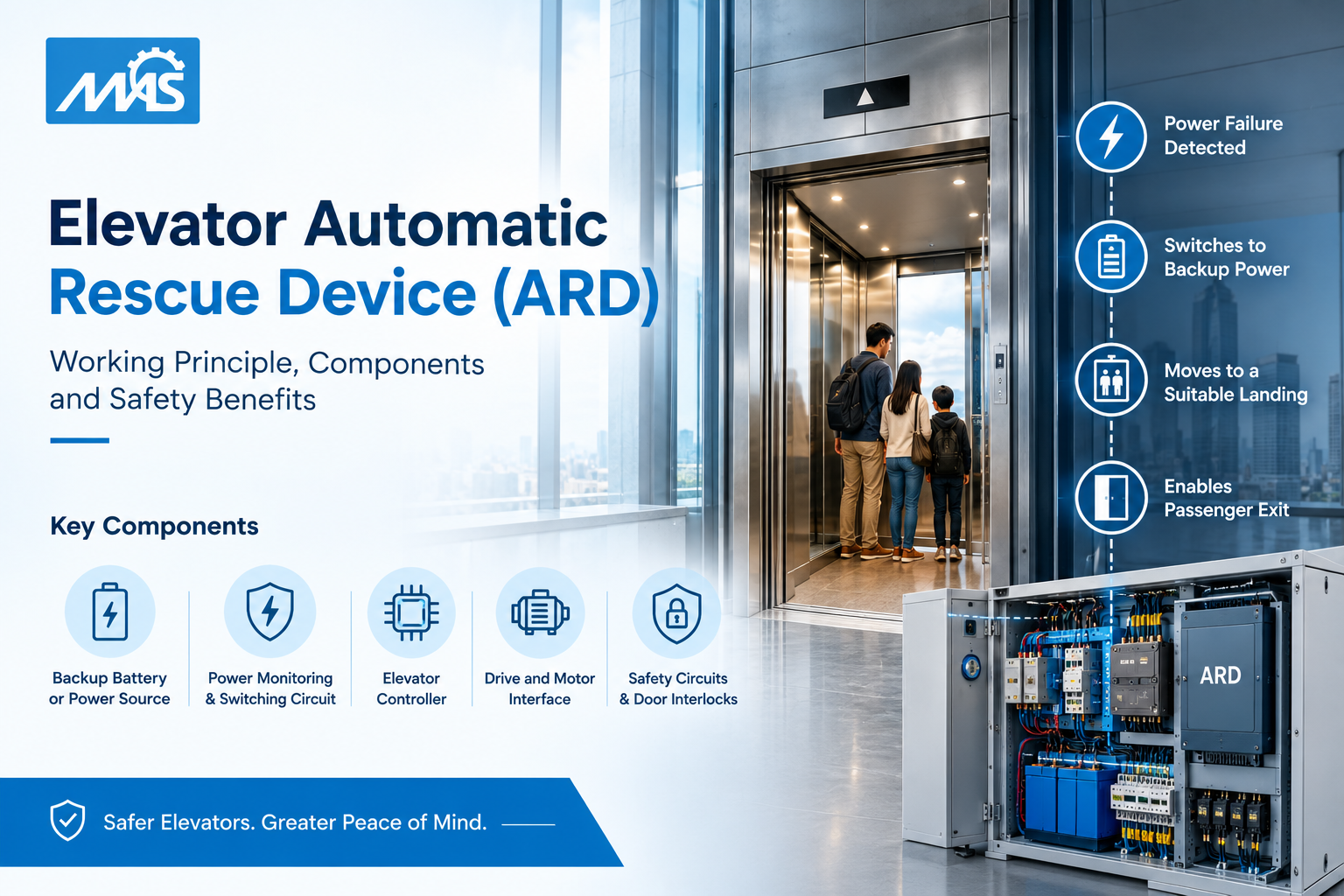
Elevator Automatic Rescue Device (ARD): Working Principle, Components and Safety Benefits
When a power failure suddenly occurs, it can interrupt the operation of the elevator and can leave the passengers stuck and waiting inside the cabin. In such situations, an appropriately configured Automatic Rescue Device (ARD) can help move the elevator to a suitable landing so passengers can exit safely, provided the system is designed for that function and its operating conditions are met.
An Elevator Automatic Rescue Device is an important part of emergency planning for compatible lift systems. It uses a backup power source and control arrangements to carry out a defined rescue sequence when the normal power supply fails.
For building owners, lift buyers, facility managers, and technicians, understanding how an ARD works is essential when evaluating elevator safety features. This guide explains its working principle, main components, benefits, maintenance requirements, and selection considerations.
What Is an Elevator Automatic Rescue Device?
An Automatic Rescue Device (ARD) is a system used to aid in elevator rescue operations when there is a power outage.
The ARD detects the loss of normal power, switches to a suitable backup supply, and works with the elevator control system to perform a programmed rescue sequence, depending on the elevator design. This means bringing the cabin to a suitable landing and opening the doors to allow passengers to deboard.
The order in which they occur depends on the elevator controller, drive system, backup power arrangement, and safety interlocks. An ARD is not a one-size-fits-all remedy, and the presence of an ARD does not relieve the need for proper maintenance, emergency communication, and trained rescue procedures.
ARD systems can be used for residential, commercial, and other elevator installations where the equipment is compatible and the applicable requirements are met.
How Does an Elevator ARD Work?
The working principle of an ARD involves several coordinated steps.
1. Detection of a Power Failure
In a normal case the elevator is driven by the building’s electrical system. If that supply fails, the ARD or related control equipment detects the interruption.
The system should be able to distinguish the power failure from other conditions that might prevent normal elevator movement.
2. Switching to Backup Power
When the conditions are fulfilled, the system notices the interruption and employs its assigned backup power source, typically a battery arrangement.
The backup supply shall be compatible with the control equipment of the elevator and the rescue operation. It should not be assumed that each ARD will power the whole elevator under all conditions.
3. Evaluating the Elevator’s Condition
The controller evaluates the system status and the conditions needed to perform the rescue sequence. Depending on the design, this may include information about cabin position, drive system, and safety circuits.
The system may not be able to execute the normal rescue sequence if a fault or safety condition prevents movement. Qualified personnel may then need to follow the manufacturer’s emergency procedure.
4. Moving the Cabin to a Suitable Landing
Where the system supports automatic movement and the required conditions are met, the ARD coordinates with the elevator controls to move the cabin to a suitable floor.
The direction and movement strategy depend on the lift’s configuration and the manufacturer’s control logic. It is not correct to assume that every elevator always travels downward or always selects the nearest floor.
5. Enabling Passenger Exit
When the cabin is at the intended landing and the required safety conditions are met, the system allows the intended door-opening sequence.
The passengers can then leave the cabin in accordance with the operating procedure of the equipment. If the system does not complete the rescue operation, passengers should use the available alarm or communication facility and wait for authorised assistance rather than attempting to force the doors open.
Main Components of an Elevator ARD System
An ARD operates through a combination of power, control, and safety components. The exact configuration varies by manufacturer and elevator type.
Backup Battery or Power Source
The backup power source supplies the energy required for the supported rescue operation. Battery condition, charging arrangements, capacity, and compatibility affect system readiness.
A degraded battery may prevent the intended rescue sequence from completing.
Power Monitoring and Switching Circuit
The monitoring circuit detects the interruption of the normal supply. Associated switching arrangements transfer the supported equipment to the designated backup source when the operating conditions permit.
Elevator Controller
The controller coordinates the elevator’s operation and communicates with the relevant control and drive equipment. During rescue operation, it follows the programmed sequence and monitors the necessary operating conditions.
For more information, read MAS Industries’ article on the elevator controller.
Drive and Motor Interface
The drive and motor arrangement determine how the cabin can move during rescue operation. The ARD, controller, and drive must be compatible.
Some systems employ dedicated rescue hardware, while other systems incorporate rescue capability into compatible control and drive equipment.
Safety Circuits and Door Interlocks
Safety circuits and door interlocks help ensure that elevator movement and door operation follow the designed safety sequence. Rescue functionality must work with these protections rather than bypassing them.
Status Indicators and Alarm Facilities
Depending on the system, indicators may show operating status, faults, or battery conditions. Cabin alarms and communication systems provide additional ways for passengers to request help if necessary.
Key Benefits of an Elevator Automatic Rescue Device
Helps reduce passenger entrapment during power interruptions
A compatible ARD can perform a defined rescue sequence without requiring an immediate manual intervention, when operating conditions allow.
Supports a more organised emergency response
Automated rescue functionality can reduce uncertainty during certain power failures. It should be supported by clear emergency instructions and appropriate communication facilities.
Improves the overall safety provision
One part of the safety arrangements for an elevator is an ARD. It is as good as its interfacing with the controller, drive, backup power, door interlocks and other safety systems.
Supports residential and commercial elevator planning
Power interruptions can affect elevators in homes, apartment buildings, offices, and commercial properties. Specifying an appropriate rescue arrangement helps building owners plan for these situations.
Helps facility managers plan maintenance
Routine checks of backup power and rescue functionality can identify developing problems before the equipment is needed during an actual interruption.
How to Choose the Right ARD for a Lift
Selecting an ARD requires more than comparing product prices. It has to be compatible with the elevator where it would be installed.
Before making an acquisition, one should consider:
- Compatibility of the Elevator: Check the type of the elevator, type of the controller, the way of driving, and the rescue method.
- Compatibility of Power Supply/Battery: The compatibility between the power supply/battery and the rescue process has to be verified.
- Compatibility of the ARD with the elevator control panel/drive: The compatibility of the ARD with the elevator control panel/drive in terms of communication and functionality needs to be verified.
- Rescue Process: The process by which the system will detect the power failure, determine the possibility of carrying out a rescue process, move the car, and open the doors should be explained by the supplier.
- Failure Indications: Check whether the equipment gives indications of problems in the battery, power, or system failure.
- Maintenance Requirements: Inquire about the replacement of batteries, inspection, availability of spare parts, and maintenance support.
- Relevant requirements: Consult the relevant Indian lift safety codes and manufacturer’s guidelines.
To find compatible solutions, you can check out MAS Industries’ elevators’ controller and drive systems, as well as the characteristics of the recommended equipment. Make sure that the ARD functionality is exactly what you need.
ARD Maintenance: What Should Be Checked?
An ARD must be maintained so it is ready for the rescue operation it was designed to perform.
Important maintenance checks are :
- Looking at the backup battery and its installed charger.
- Checking power connections and wiring.
- Inspecting fault indications on the controller and drive.
- Testing the rescue sequence using the manufacturer’s recommended method.
- Supervised test to verify desired cabin motion and door operation.
- Check the status of associated alarms and communications facilities.
- Documenting inspection results and replacing worn or defective components when needed
Testing must be carried out by qualified elevator personnel in accordance with the manufacturer’s procedure. Do not deliberately interrupt power or perform a rescue test without the proper controls and precautions.
The frequency of inspection shall be in accordance with the equipment manufacturer’s instructions, applicable regulations, and the elevator maintenance plan.
ARD vs. Manual Elevator Rescue
An ARD and a manual rescue procedure serve different purposes.
An ARD is designed to perform a defined rescue sequence automatically when the necessary power, control, and safety conditions are satisfied. Manual rescue involves authorised personnel following the elevator manufacturer’s prescribed emergency procedure when automatic rescue is unavailable or unsuccessful.
Neither method should be treated as a reason to bypass safety interlocks or force elevator doors open. Building managers should ensure that emergency instructions and communication arrangements are available to occupants and that authorised service personnel understand the correct rescue procedure.
Common ARD Problems and Prevention
Weak or deteriorated backup batteries
Batteries lose capacity over time. Routine inspections and replacement according to the manufacturer’s recommendations help maintain readiness.
Incompatible control equipment
If the rescue device is not properly matched to the controller or drive, it may not work as intended. Before installing or replacing, check for compatibility.
Faulty wiring or power connections
Loose connections or electrical faults can interfere with monitoring and switching. Qualified technicians should inspect and correct these issues.
Rescue operation not tested
The system may stay idle for extended periods, permitting faults to remain undetected. Scheduled testing helps to catch problems before they become a crisis.
Unclear emergency procedures
Even a properly installed ARD cannot guarantee a successful rescue under every possible fault condition. Passengers and building staff should know how to raise an alarm and contact authorised assistance.
Conclusion
An Elevator Automatic Rescue Device provides an important rescue function for compatible elevator systems during certain power interruptions. Its operation depends on the backup power source, controller, drive, safety circuits, and the conditions present when the interruption occurs.
For building owners and lift buyers, the priority should be to select a compatible system, verify its operating sequence, and ensure that qualified technicians maintain and test it regularly.
MAS Industries offers elevator electronic components and controller and drive products that may form part of a compatible elevator installation. Explore the MAS Industries website and consult the relevant product team to confirm equipment specifications and compatibility for your project.
Frequently Asked Questions
What is the full form of ARD in a lift?
ARD stands for Automatic Rescue Device. It is designed to support a defined elevator rescue operation during certain power failures.
How does an ARD work during a power failure?
A compatible system detects that the normal power is lost, uses its own backup supply, and, using the elevator controls, executes the programmed sequence of rescuing under the given conditions.
Does every elevator ARD work in the same way?
No. Rescue direction, cabin movement, backup power requirements, and door operation depend on the elevator design, controller, drive, and manufacturer.
Can an ARD work if the elevator has a mechanical or electrical fault?
Not necessarily. A fault or safety condition may prevent movement or completion of the rescue sequence. Authorised personnel must follow the manufacturer’s emergency procedure.
How often should an ARD be maintained?
Maintenance and testing shall be done according to the manufacturer’s instructions, applicable regulations, and approved maintenance plan of the elevator. Qualified personnel should check the condition of the battery and rescue operation.
Is an ARD a replacement for elevator maintenance?
No. An ARD is one element of the overall safety system. Routine elevator maintenance, functional testing, communication facilities, and appropriate emergency procedures remain essential.


Leave a Reply