
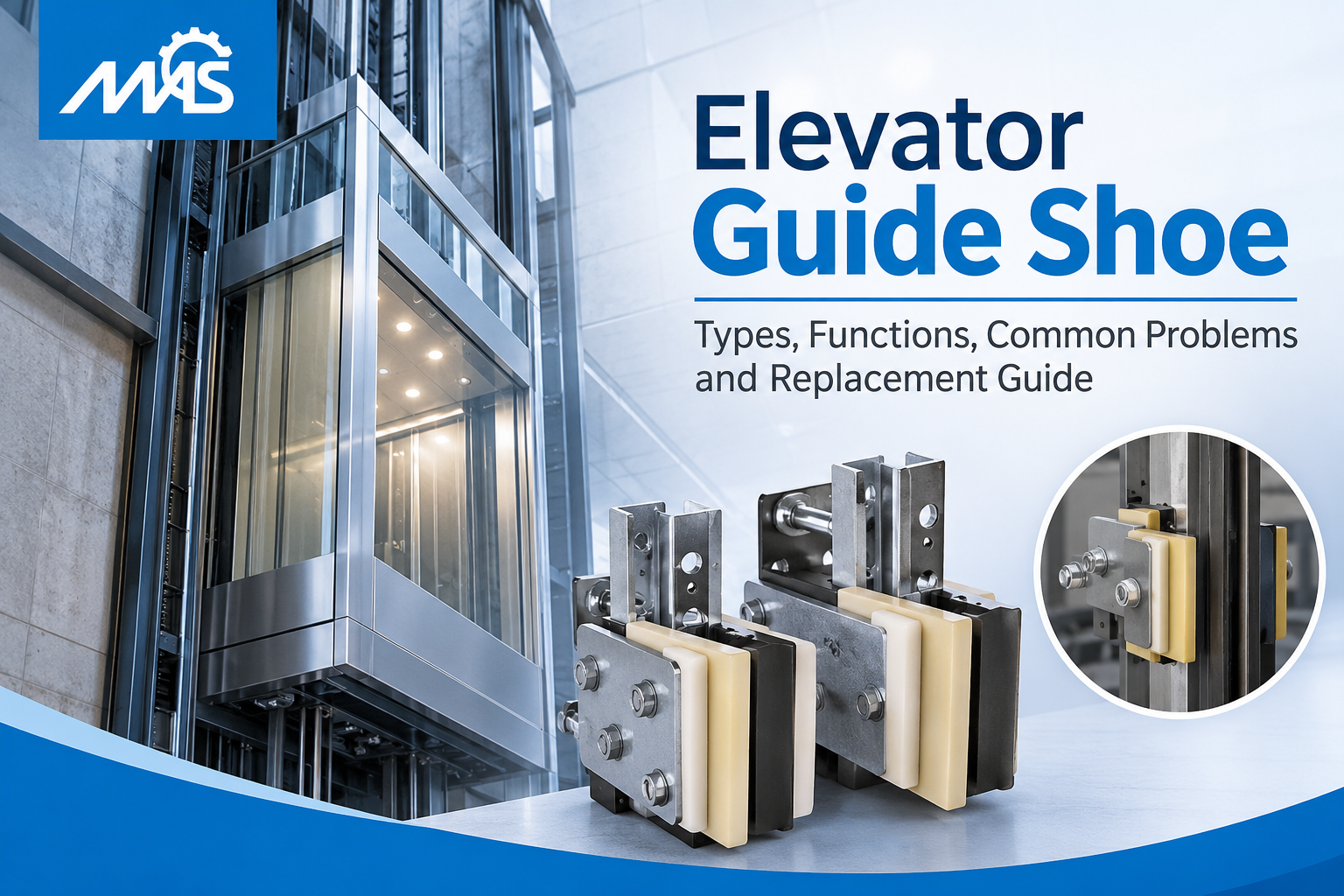
Elevator Guide Shoe: Types, Functions, Common Problems and Replacement Guide
Introduction
An elevator consists of several mechanical and safety components that work together to ensure smooth and reliable movement. While components such as motors, guide rails and control systems receive considerable attention, smaller mechanical parts also play an important role in elevator performance.
One such component is the elevator guide shoe. It helps guide the elevator car along the guide rails and maintain its alignment during upward and downward movement.
A properly selected and maintained guide shoe can help reduce unwanted vibration, minimise friction and support a smoother elevator ride. Understanding its types, functions and common problems is important for elevator manufacturers, installation professionals and maintenance technicians.
In this guide, we will explore how elevator guide shoes work, their different types and the important factors to consider when selecting or replacing them.
What Is an Elevator Guide Shoe?
An elevator guide shoe is a mechanical component fitted to the elevator car frame and, in applicable designs, the counterweight frame. It engages with the elevator guide rail to guide the assembly along its vertical travel path.
Its primary purpose is to help maintain proper alignment and limit unwanted sideways movement during elevator operation.
Guide shoes are designed to work with specific guide rail dimensions, elevator loads and operating conditions. Selecting the appropriate guide shoe is therefore important for reliable elevator performance.
How Does an Elevator Guide Shoe Work?
Elevator guide shoes operate in combination with guide rails installed inside the elevator shaft.
When the elevator moves between floors, the guide shoes travel along the corresponding guide rails. Their contact or rolling arrangement helps control lateral movement and maintain the alignment of the elevator car.
The working process can be understood through the following steps:
- Installation: Guide shoes are mounted on the elevator car frame and counterweight assembly, as required by the elevator design.
- Rail engagement: The guide shoe is positioned to engage with the corresponding guide rail.
- Guided movement: As the elevator travels, the guide shoe follows the rail and helps control sideways movement.
- Movement stability: The guide shoe arrangement helps maintain alignment and contributes to a smoother travelling experience.
The actual performance depends on correct installation, rail alignment, loading conditions and the guide shoe design.
Different Types of Elevator Guide Shoes
Elevator guide shoes are generally available in different designs depending on the elevator application, speed, load capacity and operating requirements.
1. Sliding Guide Shoes
Sliding guide shoes use a sliding contact surface that moves along the elevator guide rail.
They are commonly used in suitable low- and moderate-speed elevator applications.
Key characteristics:
- Use sliding contact with the guide rail.
- Have a relatively simple mechanical arrangement.
- Require appropriate lubrication where specified by the design.
- Need periodic inspection for wear and surface damage.
2. Roller Guide Shoes
Roller guide shoes use rollers that move along the guide rail instead of relying on continuous sliding contact.
They are used in applications where controlled movement and reduced sliding friction are important.
Key characteristics:
- Use rollers to follow the guide rail.
- Can help reduce sliding friction.
- Require inspection of rollers, bearings and mounting arrangements.
- Must be selected according to the elevator’s operating specifications.
Sliding Guide Shoe vs Roller Guide Shoe
| Comparison factor | Sliding guide shoe | Roller guide shoe |
| Movement | Sliding contact | Rolling contact |
| Friction | Sliding friction | Rolling friction |
| Main components | Guide shoe body and sliding liner | Rollers, bearings and mounting assembly |
| Maintenance focus | Liner wear and lubrication | Roller and bearing condition |
| Selection | Based on lift design and application | Based on lift design and application |
Neither type is universally suitable for every elevator. The selection should be based on the elevator manufacturer’s specifications.
Common Signs of Elevator Guide Shoe Wear
Like other mechanical components, elevator guide shoes can experience wear through continuous operation.
Identifying potential problems early can help maintenance professionals investigate the cause and prevent further damage.
Some common warning signs include:
1. Unusual Vibration During Travel
Excessive vibration or lateral movement may indicate guide shoe wear, rail alignment issues or other mechanical problems. Technicians should also check whether the elevator rail clips holding the guide rails are secure.
2. Unusual Noise
Grinding, rubbing or abnormal mechanical sounds near the guide rail assembly may require inspection.
3. Visible Wear or Damage
Cracks, deformation, damaged liners or excessive wear on the contact surfaces can affect guide shoe performance.
4. Increased Friction
In sliding guide shoes, improper lubrication or worn contact surfaces may contribute to increased friction.
5. Irregular Elevator Movement
If the elevator experiences unusual movement or reduced ride comfort, technicians should inspect the complete guiding arrangement rather than assuming the guide shoe is the only cause.
Factors to Consider When Selecting an Elevator Guide Shoe
Choosing the correct elevator guide shoe requires consideration of several technical factors.
1. Elevator Load Capacity
The guide shoe must be suitable for the rated load and the mechanical requirements of the elevator system.
2. Elevator Operating Speed
Different guide shoe designs are intended for different operating conditions. Always verify compatibility with the elevator’s rated speed.
3. Guide Rail Size
The guide shoe must match the dimensions and profile of the guide rail.
4. Type of Guide Shoe
Choose between sliding and roller arrangements according to the elevator design and operating requirements.
5. Product Quality and Testing
Manufacturing quality, material selection, dimensional accuracy and product testing are important considerations when choosing elevator components.
When Should Elevator Guide Shoes Be Replaced?
There is no single replacement interval that applies to every elevator guide shoe.
Replacement requirements depend on operating hours, elevator usage, component condition, manufacturer recommendations and maintenance inspection results.
A guide shoe may require replacement when:
- Its sliding liner or roller assembly shows excessive wear.
- The component has visible cracks or physical damage.
- It no longer meets the specified dimensional or performance requirements.
- Inspection identifies damage that cannot be corrected through approved maintenance.
Replacement should be performed by qualified elevator professionals using compatible components and following the equipment manufacturer’s instructions.
Why Quality Guide Shoes Matter for Elevator Performance
Guide shoes are an important part of the elevator guiding system. Their design and manufacturing quality can influence alignment, friction, wear and ride comfort.
For elevator manufacturers and maintenance professionals, selecting a suitable component involves checking product specifications, compatibility and quality-testing information.
MAS Industries, an elevator components manufacturer, offers elevator guide shoes designed for different elevator applications. Its guide shoe range includes models such as EGS 1, EGS 2, EGS 2A, EGS 1R and EGS 3, with different capacity, speed and rail-size specifications.
The company’s guide shoes are tested in a NABL-approved laboratory for destructive and non-destructive testing, including breaking load, spectrochemical and hardness testing.
Explore the MAS Industries Elevator Guide Shoe Range to understand the available models and their specifications.
Conclusion
An elevator guide shoe is an essential mechanical component that helps guide the elevator car along its guide rails and maintain proper alignment during operation.
Understanding the differences between sliding and roller guide shoes, recognising wear indicators and selecting components according to elevator specifications can help support reliable elevator performance.
For elevator manufacturers, installers and maintenance professionals, choosing quality-tested and application-compatible guide shoes is an important consideration when designing or maintaining elevator systems.
Looking for elevator guide shoes for your next project? Contact MAS Industries to explore suitable models and component specifications.


Leave a Reply