
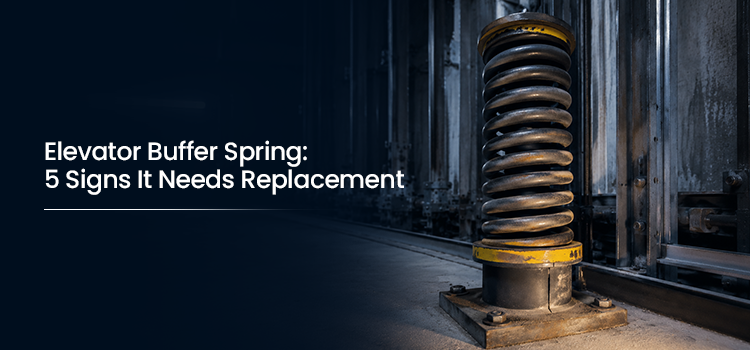
Elevator Buffer Spring: 5 Signs It Needs Replacement
Elevator safety comes down to a lot of mechanical parts doing their job right, including the ones sitting at the bottom of the shaft. One of the more important pieces in that safety chain is the elevator buffer spring.
Think of an elevator buffer as a last line of defence. If the car or counterweight ever exceeds its normal operating limit, the buffer is there to absorb the impact or cushion that impact, protecting the system and the people inside that system.
Buffer springs, like all mechanical parts, do not last forever. Age, corrosion, environmental exposure, physical damage or just years of repeated stress can wear them down.
Catching the early warning signs of elevator buffer spring wear is what lets maintenance teams step in before a small issue turns into a bigger one.
Here are five signs worth watching for that could mean an elevator buffer spring needs a closer look or outright replacement.
What Is an Elevator Buffer Spring?
Buffer springs live in the elevator pit alongside the other safety and mechanical hardware down there. Getting the elevator pit depth right matters here too, since it affects how these components are placed and how safely the elevator runs.
The buffer’s job, at its core, is simple: absorb or cut down impact energy if the car or counterweight ever moves beyond where it’s supposed to stop.
Under normal day-to-day operation, the buffer probably won’t ever need to absorb a serious impact. Still, it’s a core part of the elevator’s overall safety system, which is exactly why it needs to stay in good shape.
Depending on the elevator design, buffer springs might need different:
- Coil diameters
- Spring lengths
- Compression loads
- Mounting arrangements
- Plate configurations
- Load capacities
That’s why picking the right buffer isn’t a guessing game. It should always come down to the elevator manufacturer’s specs and what the specific lift system actually calls for.
Why Is Elevator Buffer Spring Condition Important?
There’s a whole group of safety and mechanical components living in the elevator pit that keep the lift running reliably. Buffer springs stand out among them because they’re what protects the car, the counterweight and the surrounding equipment if something goes wrong on the way down.
As part of that broader elevator safety components, buffer springs have to stay in good physical shape so they can actually do their job when it’s needed.
Heavy corrosion, deformation or mounting problems can quietly chip away at how reliable they are. That’s why regular inspection matters so much. It gives maintenance teams the chance to catch trouble early, before it turns into something more serious.
1. Visible Rust or Corrosion on the Buffer Spring
Rust is usually the easiest thing to spot during a pit inspection.
Elevator pits aren’t always dry environments. Moisture, water seepage, condensation and general humidity can creep in, and over time, that exposure can lead to corrosion on the metal components.
A little surface discoloration doesn’t automatically mean the spring is done for, but heavy corrosion isn’t something to brush off either.
Here’s what technicians should be checking for:
- Heavy rust formation
- Flaking metal
- Pitting on the spring surface
- Corrosion around mounting areas
- Deterioration of the protective finish
Once corrosion gets bad enough, it can start eating into the spring’s structural integrity, not just its looks.
Keeping the pit clean and dealing with water or moisture issues early goes a long way toward protecting everything installed down there.
2. Permanent Compression or Change in Spring Height
Every buffer spring is built to a specific length and compression profile.
If a spring looks permanently squashed, sits shorter than it should, or just won’t bounce back to its expected position, that’s worth a second look.
Such permanent deformation usually means something, whether it’s too much loading, physical damage, or just wear over time.
Maintenance teams should be comparing what they’re actually seeing against the spec sheet for that component.
A few things worth checking:
- Free spring length
- Coil diameter
- Compression characteristics
- Overall physical condition
- Correct mounting position
If a spring has drifted noticeably from its intended dimensions, don’t just adjust it and move on. Figure out why it happened first.
3. Bent, Cracked or Deformed Spring Coils
Physical deformation is another red flag that calls for a proper evaluation.
Coils are meant to hold their shape and alignment. Once they start bending, cracking, or twisting out of shape, the way forces travel through the spring can change too.
Keep an eye out for:
- Uneven coil spacing
- Bent coils
- Cracks in the spring
- Sideways deformation
- Unusual contact between coils
- Damage near the top or bottom of the spring
Any structural damage like this really needs a qualified elevator technician to take a look.
At that point, replacing the component is usually the safer route. Trying to patch up a safety part with a repair that wasn’t designed for it can change how it’s meant to perform.
4. Damage or Misalignment Around the Buffer Mounting
It’s not just the spring itself that needs checking. The mounting matters just as much.
Depending on the design of the elevator, the buffer springs are supplied with different mounting arrangements- some with mounting plates and some without.
When inspecting the area around the mount, look for:
- Loose mounting components
- Bent plates
- Damaged fasteners
- Misalignment
- Movement from the intended position
- Cracks or damage around the mounting surface
Even a well-chosen buffer won’t perform properly if it’s not positioned right and securely fastened.
And if it has drifted out of alignment, don’t just push it back into place. Figure out what caused the movement in the first place.
5. Evidence of an Abnormal Impact or Elevator Safety Event
Any time there’s been an unusual event where the car or counterweight might have contacted the buffer, it deserves a careful inspection, even if nothing looks obviously wrong at first glance.
An abnormal impact can put a lot of force through the buffer and its mount without leaving visible damage right away.
After something like that happens, technicians should be checking:
- Spring deformation
- Overall spring height
- Mounting condition
- Alignment
- Cracks
- Protective coating damage
- Surrounding elevator pit components
This kind of inspection should follow whatever the manufacturer’s maintenance procedures and safety requirements call for.
Don’t assume a component that’s been through an abnormal impact is automatically fine to keep using.
What Causes Elevator Buffer Springs to Wear?
Buffer springs are built tough, but a handful of conditions can still wear them down over time.
Moisture and Pit Water
Standing water or high humidity in the pit is a common contributor to rust and corrosion.
Age
Like most mechanical parts, springs can gradually degrade the longer they’re in service.
Incorrect Installation
Wrong positioning, poor mounting, or installing a buffer that isn’t actually right for the application can all hurt performance down the line.
Physical Impact
Abnormal elevator movement or direct contact with the buffer puts real stress on the component.
Poor Pit Conditions
Dirt, water, debris and lax maintenance around the pit don’t just make inspection harder, they can actively speed up wear.
Incorrect Buffer Selection
Not every buffer fits every elevator. Buffer springs vary in size and compression capacity, and installing the wrong one for the application can create real performance and safety issues.
When Should an Elevator Buffer Spring Be Replaced?
There isn’t one simple visual test that tells you when every buffer spring needs replacing.
It really comes down to the component’s condition, the elevator’s design, the manufacturer’s specs and whatever maintenance requirements apply.
Replacement is usually worth considering when an inspection turns up significant:
- Corrosion
- Cracking
- Permanent deformation
- Coil damage
- Mounting damage
- Misalignment
- Dimensional changes
- Damage following an abnormal impact
At the end of the day, safety components like this should always be assessed by trained, authorised elevator professionals.
Can a Damaged Elevator Buffer Spring Be Repaired?
Repairing safety-related elevator parts isn’t something to take lightly.
A spring that’s deformed, cracked, badly corroded or structurally compromised shouldn’t just be straightened out, welded, or modified as a quick fix.
Changing its shape or physical properties can change how it behaves under compression, which defeats the purpose.
If replacement is the answer, the new elevator buffer spring needs to be picked based on the right dimensions, load characteristics and system specifications, not just what’s on hand.
How to Choose the Correct Elevator Buffer Spring
Picking a buffer spring is more involved than just matching sizes.
There’s a handful of technical factors worth working through.
1. Coil Diameter
This is one of the core specs, and it needs to match what the application actually requires.
2. Spring Length
Different elevator systems call for different buffer heights and dimensions.
3. Compression Load
The compression capacity needs to suit the elevator system and how it actually operates.
4. Mounting Configuration
Some setups need a buffer spring with a mounting plate, others don’t.
5. Elevator Car and Counterweight Requirements
Where the component sits, and how the overall system is configured, both affect what kind of buffer arrangement is appropriate.
6. Manufacturer Specifications
Always double check the elevator’s technical requirements before picking a replacement safety component.
Don’t pick a buffer because it looks “about right” or the measurements are “close enough”.
Elevator Buffer Springs from MAS Industries
MAS Industries offers a range of elevator buffer springs built for elevator mechanical and safety applications.
The lineup covers different spring dimensions and configurations to suit different elevator requirements, including buffer springs available with and without mounting plates.
Beyond buffer springs, MAS Industries also supplies a broader range of elevator mechanical and safety components, including overspeed governors, safety clutches, rope anchorages, guide shoes, diverter pulleys, rail clips, cable grippers, oilers and other lift components.
For detailed specifications and available models, visit the Elevator Buffer Spring product range from MAS Industries.
Regular Inspection Helps Protect Elevator Safety Components
An elevator buffer sits out of sight most of the time, but that doesn’t make it any less important.
Rust, permanent compression, damaged coils, mounting issues or signs of an abnormal impact are all reasons to give the buffer a closer look.
Regular pit inspections give maintenance teams the chance to catch these issues early and decide whether servicing or replacement is the right call.
And when replacement is needed, the new component should always be chosen based on the elevator’s actual technical requirements, not just because it looks similar or is roughly the right size.
Using the correct elevator buffer spring and keeping the pit in good condition is what keeps this safety component ready to do its job the moment it’s actually called on.
Frequently Asked Questions
What is the purpose of a buffer spring in an elevator?
An elevator buffer spring is installed in the elevator pit as a safety component. It helps absorb or reduce impact energy if the elevator car or counterweight travels beyond its normal lower operating limit.
Where is an elevator buffer spring installed?
Buffer springs are generally installed at the bottom of the elevator shaft in the elevator pit, positioned according to the elevator system design.
How can you tell if an elevator buffer spring is damaged?
Common warning signs include significant rust, permanent compression, bent or cracked coils, mounting damage, misalignment and visible damage following an abnormal impact.
Can a rusted elevator buffer spring still be used?
Minor surface corrosion and serious structural corrosion are different conditions. A qualified elevator technician should inspect the spring and determine whether its condition remains acceptable or replacement is required.
Are all elevator buffer springs the same size?
No. Buffer springs can vary in coil diameter, overall length, compression load and mounting configuration. The appropriate component should be selected according to the technical requirements of the elevator.
Should an elevator buffer be inspected after an impact?
Yes. If there’s reason to believe the car or counterweight has contacted the buffer, the buffer and surrounding components should be professionally inspected for deformation, mounting damage and other signs of deterioration.


Leave a Reply